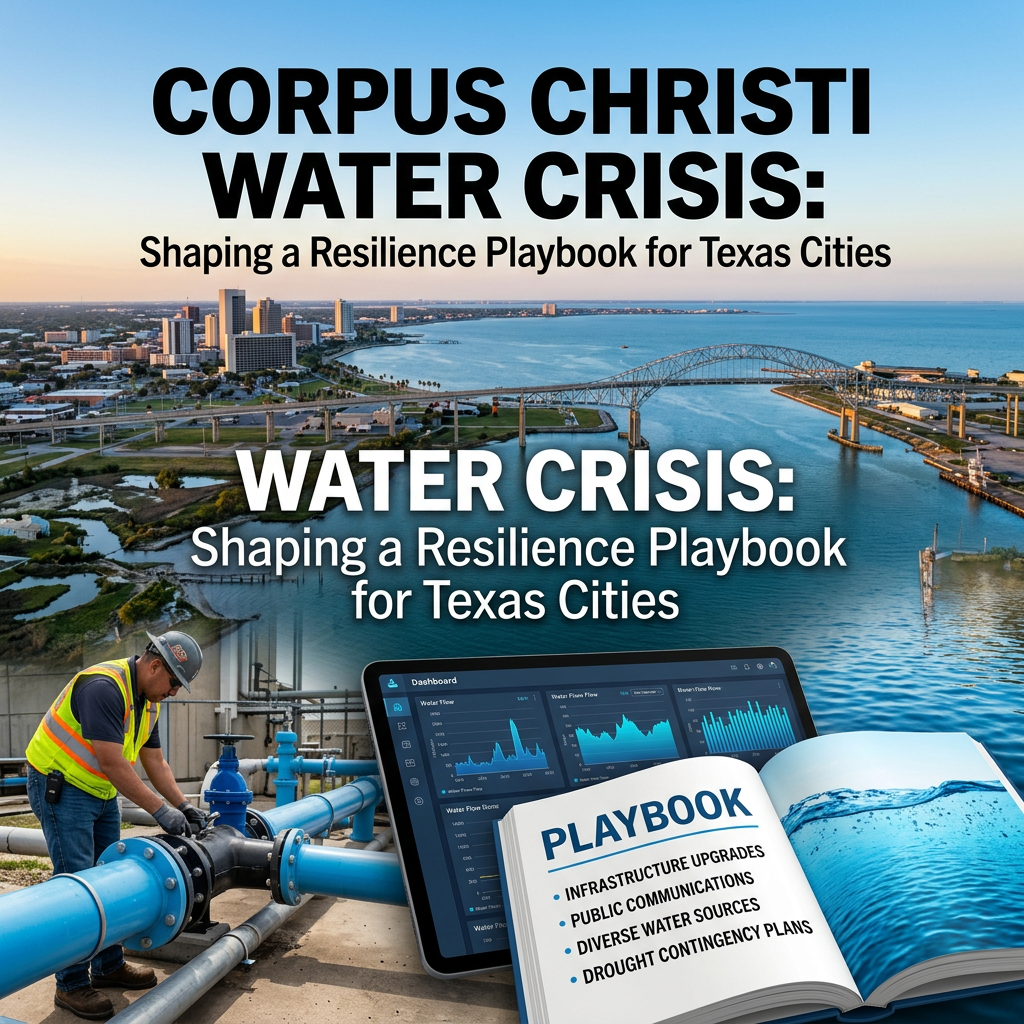
Moving from an intermittent water system to a resilient water system is hard.
Imagine operating an electricity grid that depended almost entirely on weather-driven wind and solar generation and which lacked batteries big enough to see it through major heat waves and cold snaps. It would be a volatile and sometimes scary ride.
That electricity hypothetical describes the actual lived reality of Corpus Christi’s water grid. Corpus relies on surface water and water wells along the Nueces River that are hydrologically connected to the river—and as such, to drought. When the rains come, customers can breathe a sigh of relief. When it’s dry for more than a few months, the specter of shortage quickly looms.
There are key lessons for ALL Texas cities to learn and that’s what the slide deck below takes a first crack at introducing. There are key lessons for every Texas city to learn. The slide deck below takes a first crack at outlining them, with deeper analysis, writing, and podcast coverage to follow.
The initial bottom line: The cheapest fix—and the hardest one—will be changing the culture of Corpus Christi water planning. Next come higher rates, groundwater development, reuse and seawater desalination. A decade of hard work lies ahead.

Slides downloadable here: https://gabrielcollins.substack.com/p/corpus-christi-water-crisis-resilience-playbook
Frequently asked questions
Why is Corpus Christi running short of water?
Corpus Christi is short of water because its supply depends on drought. The city relies on surface water and wells along the Nueces River that are hydrologically connected to the river. When rains come, supply recovers, but when it stays dry for more than a few months, the threat of shortage quickly returns.
What can Corpus Christi do to fix its water supply problem?
Corpus Christi’s first and cheapest fix is changing the culture of its water planning, which Gabriel Collins also calls the hardest step. After that come higher water rates, groundwater development, water reuse and seawater desalination. He expects the shift from an intermittent to a resilient water system to take a decade of hard work.
How is Corpus Christi’s water system like an electricity grid?
Corpus Christi’s water system behaves like an electricity grid that depends almost entirely on wind and solar power and lacks batteries big enough to cover major heat waves and cold snaps. In both cases supply rises and falls with the weather, producing a volatile ride whenever the rain, wind or sun fails to show up.
Will new water sources make water more expensive in Corpus Christi?
Yes, diversifying Corpus Christi’s water supply portfolio will make water cost more, according to the article’s cost curve slide. Existing reservoir and pipeline supplies are the cheapest sources, while prospective options such as brackish and seawater desalination, direct potable reuse and new groundwater sit at higher unit costs per 1,000 gallons.
What lessons does Corpus Christi offer other Texas cities on water?
Corpus Christi shows other Texas cities the risks of relying on a drought-exposed, weather-dependent water supply. Gabriel Collins argues every Texas city should study its case, especially the need to reform planning culture and pursue new supplies such as groundwater, reuse and desalination before a dry spell turns into a shortage.



Leave a Reply