Key takeaways
- Gabriel Collins argues that any Russian nuclear use in or around Ukraine requires a decisive and damaging U.S./NATO conventional response, not a nuclear one.
- Without a strong response, China, North Korea, and perhaps eventually Iran may conclude that nuclear coercion through demonstration use can consolidate revisionist gains.
- Collins lists six regional military options, including sinking all Russian military vessels in the Black Sea and destroying the Kerch Bridge.
- Global options include striking Russia’s Tartus and Hmeimim bases in Syria and considering sinking some Russian Navy surface vessels at sea.
- The U.S. and OECD should seize all locatable Russian assets and liquidate them as needed to fund nuclear cleanup and reconstruction in Ukraine.
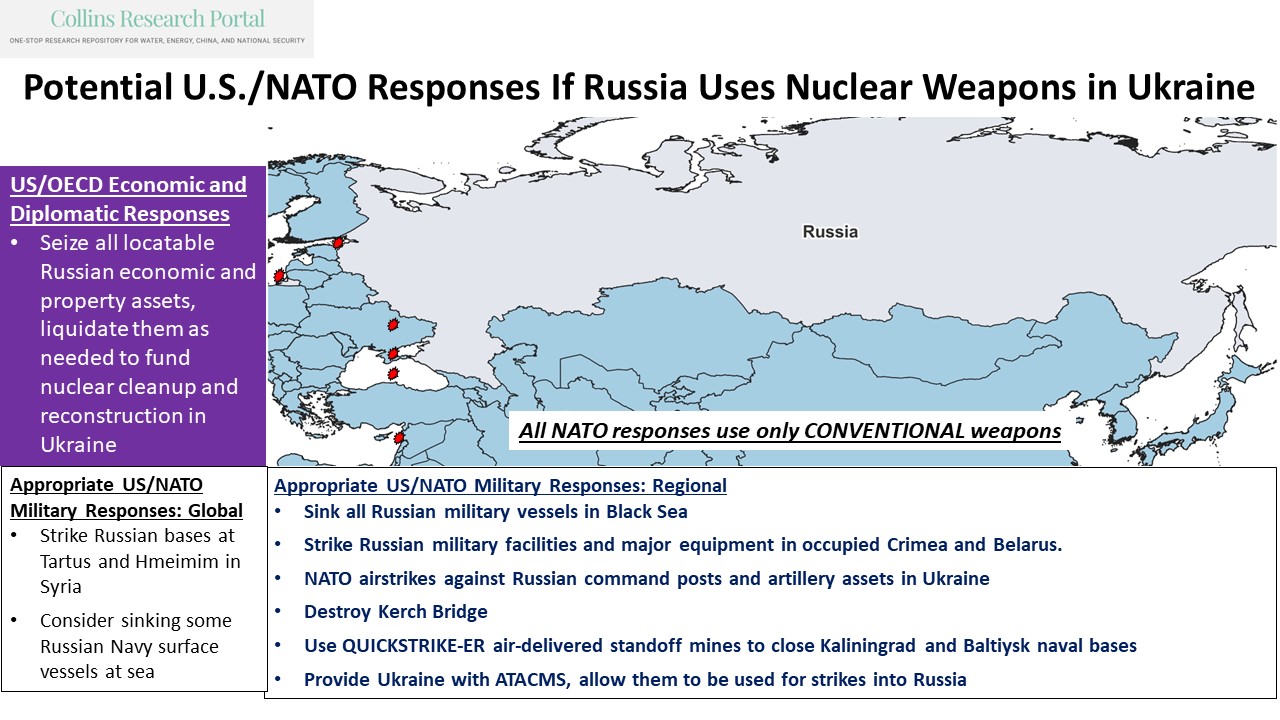
Appropriate US/NATO Military Responses: Regional
•Sink all Russian military vessels in Black Sea
•Strike Russian military facilities and major equipment in occupied Crimea and Belarus.
•NATO airstrikes against Russian command posts and artillery assets in Ukraine
•Destroy Kerch Bridge
•Use QUICKSTRIKE-ER air-delivered standoff mines to close Kaliningrad and Baltiysk naval bases
•Provide Ukraine with ATACMS, allow them to be used for strikes into Russia
Appropriate US/NATO Military Responses: Global
•Strike Russian bases at Tartus and Hmeimim in Syria
•Consider sinking some Russian Navy surface vessels at sea
US/OECD Economic and Diplomatic Responses
•Seize all locatable Russian economic and property assets, liquidate them as needed to fund nuclear cleanup and reconstruction in Ukraine
Frequently asked questions
How would NATO respond if Russia used a nuclear weapon in Ukraine?
Gabriel Collins argues NATO should answer with a decisive and damaging conventional response. His nine options include sinking Russian military vessels in the Black Sea, striking Russian facilities in occupied Crimea and Belarus, hitting command posts and artillery in Ukraine, destroying the Kerch Bridge, and striking Russian bases in Syria.
Why does a Russian nuclear strike in Ukraine need a strong Western response?
A weak response would signal that nuclear coercion works. Collins warns that various nuclear-armed states, including China, North Korea, and perhaps eventually Iran, could conclude that demonstration use of nuclear weapons is a viable path to consolidate revisionist gains, making a decisive conventional reply necessary.
Could the U.S. close Russia’s Baltic naval bases after nuclear use?
Collins proposes using QUICKSTRIKE-ER air-delivered standoff mines to close the Kaliningrad and Baltiysk naval bases. The option is one of six regional military responses he lists, alongside NATO airstrikes on Russian command posts and artillery in Ukraine and strikes on major equipment in Crimea and Belarus.
What role would ATACMS play in a response to Russian nuclear use?
Collins recommends providing Ukraine with ATACMS missiles and allowing them to be used for strikes into Russia. The step appears among his regional military responses, meant to impose direct costs on Russia through Ukrainian forces alongside NATO’s own conventional strikes in and around Ukraine.
What economic penalties could follow Russian nuclear use in Ukraine?
Collins proposes that the U.S. and OECD countries seize all locatable Russian economic and property assets. Those assets would be liquidated as needed to fund nuclear cleanup and reconstruction in Ukraine, pairing an economic and diplomatic response with the regional and global military options.



Leave a Reply