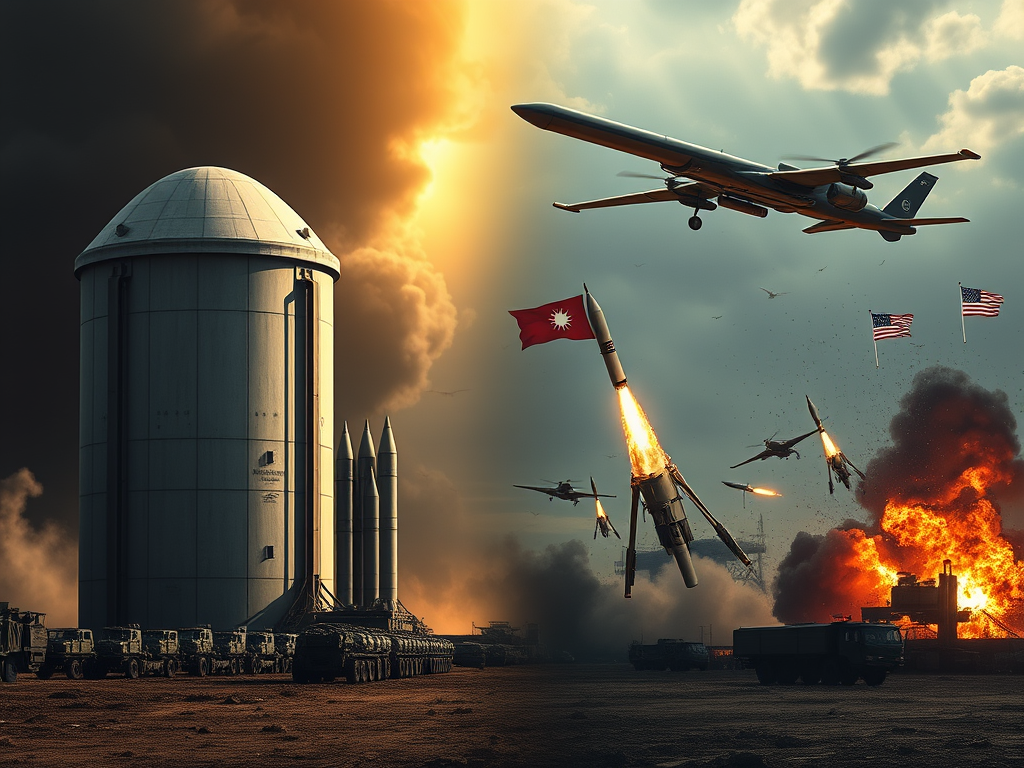
Nuclear proliferation is (and should be) a matter of deep policy focus. But events of the past 12-to-15 months raise an interesting new question–what if the proliferation of increasingly capable and affordable conventional deep strike capabilities is eroding the protective bubble that nuclear deterrence exerts?

I write this because we have now seen (1) Iran twice rain conventional ballistic missiles and drones on Israel (a nuclear power) without precipitating a nuclear response, (2) India and Pakistan (both nuclear powers) launch fairly deep conventional strikes on each other, and (3) Ukraine just potentially damaged/destroyed 1/3 of Russia’s strategic bombers with an incredibly creative operation using drones imported in truck trailers. So far at least, none of these dramatic events–which would have been hard to conceive of just 5 years ago–have precipitated a nuclear response.
To be sure, each situation is incredibly fact-dependent and it would probably be dangerous to immediately draw sweeping conclusions. Nonetheless, each time this dynamic plays out in various parts of the world where there is kinetic conflict involving a nuclear-armed state, the fundamental question will arise.
And each time a nuclear-armed state’s opponent strikes it with long range conventional weapons and there is NOT a nuclear response, the envelope of deterrence shrinks. Deterrence is much more psychological than physical, a reality Ukraine has massively exploited in its war for survival. It has struck the bomber base at Engels multiple times in the past few years, attacked strategic warning radars, and now, in one fell swoop crippled one leg of Russia’s nuclear triad.
This is big stuff. I don’t have ready answers and this post is probably going to evolve significantly as the debate deepens and I get feedback. One issue that comes to front of mind from an American perspective is “what do Ukraine’s actions potentially teach us about US latitude for conventional strikes on China if a war ever broke out?”
It’s an uncomfortable and unhappy subject, but an incredibly relevant one because so much of the public debate in recent years has been premised on the idea that conventional strikes on the PRC in the course of a conflict over Taiwan (for instance) would trigger World War III and a nuclear Armageddon. But what if they perhaps would not? Again, there are not clear answers, but thinking this stuff through will be incredibly important for US and allied planners if we are to more effectively deter conflict in the Indo-Pacific or, if the unthinkable happens, best position the forces of freedom to prevail.
Russia’s handling of Ukraine’s recent strikes should also inform NATO planning. There is also a flip side to the questions these strikes raise–if Ukraine is able to disable a material portion of Russia’s nuclear-capable bomber force and not suffer nuclear retaliation, what does that mean for the US?
The things that have happened to Russia could potentially be visited upon us as well as long-range conventional strike technology and tactics (especially in the drone realm) continue to proliferate. What would we do if an adversary or one of their proxies tried an attack like this against Diego Garcia, Guam, or one of the Stateside bomber bases?
If we are not already intensively engaged with this question and thinking through responses, we should start doing so. Reality will not wait for us on any of these fronts. Iran, India, Pakistan, and most of all, Ukraine have each taken bold actions that are reshaping the strategic environment and the ways that we’ll have to potentially rethink deterrence if we want to stave off conflict.
Suggested Citation: Gabriel Collins, “Is Nuclear Deterrence Eroding in the Face of Proliferating Conventional Deep Strike Capabilities?” Collins Research Portal, 1 June 2025.


Leave a Reply