Watching the two rapid succession blackouts in Cuba are a cause for humanitarian concern. Cuba’s electricity challenges are decades in the making but given that the failure of a single key plant appears to have began the latest cascade, targeted American assistance could yield real benefits.
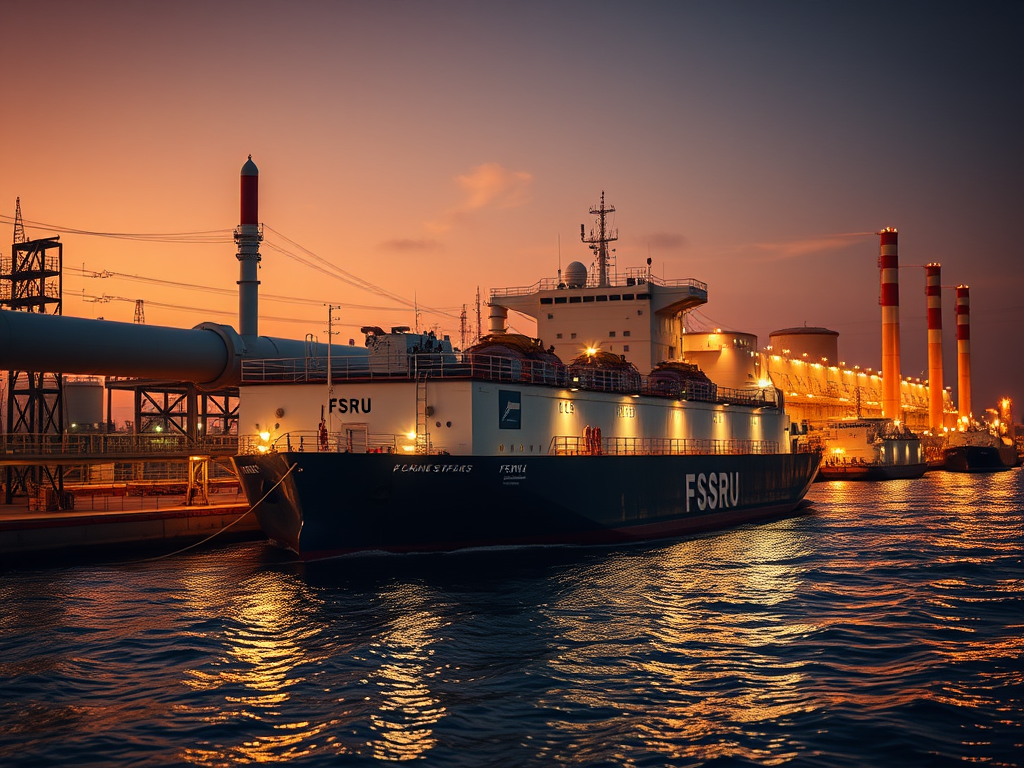
The situation also presents a real engagement opportunity for the United States to demonstrate its commitment to an energy abundance agenda across the non-OECD world. One way to capitalize on this energy geoeconomics opportunity would be to underwrite political risk insurance for a floating storage and regasification vessel (FSRU) and an accompanying contract for liquefied natural gas (LNG). This would likely require sanctions waivers. It would also require monitoring to ensure that Russian LNG did not end up supplying US-backed facilities. With appropriate political will, it would likely be technically feasible.
Leveraging our energy abundance as a force for good is an option well worth considering given the opportunity to bolster US regional influence, displace adversaries like China, Russia, and Venezuela that capitalize on our absence from Cuba and to “do what is right” as we also pursue strategic interests. A million tonnes per year of Texas or Louisiana LNG (or LNG from other places) could supply two 330 MW gas fired plants running at 65% utilization. Cuba’s Boca de Jaruco plant fits this profile and is located near the ocean, which would facilitate FSRU placement.
As my colleague Steven Miles and I wrote in 2023, FSRUs have a number of advantages for places like Cuba that are facing an acute energy supply crisis. We were talking about Europe as it struggled to cope with loss of Russian gas after Moscow’s second invasion of Ukraine in 2022, but many of the basic points would hold in Cuba as well. In relevant part:
–FSRUs offer incremental and rapidly deployable energy intake capacity that can underpin near-term gas security while also not locking a party into long-term fossil fuel or other infrastructure investments.
–FSRUs are typically chartered for a limited period, which could be as short as one to two years. The fixed infrastructure needed to move gas from ship to shore can cost in the range of $100-to-$130 million per facility based on the experiences of Bangladesh and Lithuania.9
–This is a fifth of what it could cost to build a comparable onshore regas facility; with more rapid amortization, it would require a much shorter time commitment to LNG or natural gas, after which vessel charters can be allowed to expire and associated facilities decommissioned if consumers transition to alternative energy sources.10
–



Leave a Reply