Key takeaways
- Distributed gas-fired generation offers Ukraine a cheaper, harder-to-target way to restore power after Russian strikes cut dispatchable capacity to about 1/3 of pre-war levels.
- Ukraine’s basic humanitarian winter power load is roughly 3 gigawatts, about a third of its current electricity supply deficit, by the authors’ household-based estimate.
- Russia’s April 2024 strike on the 1,825 MW Tripilska plant cost about $16,500 per MW destroyed; dispersed 20-40 MW gensets could raise that to millions per MW.
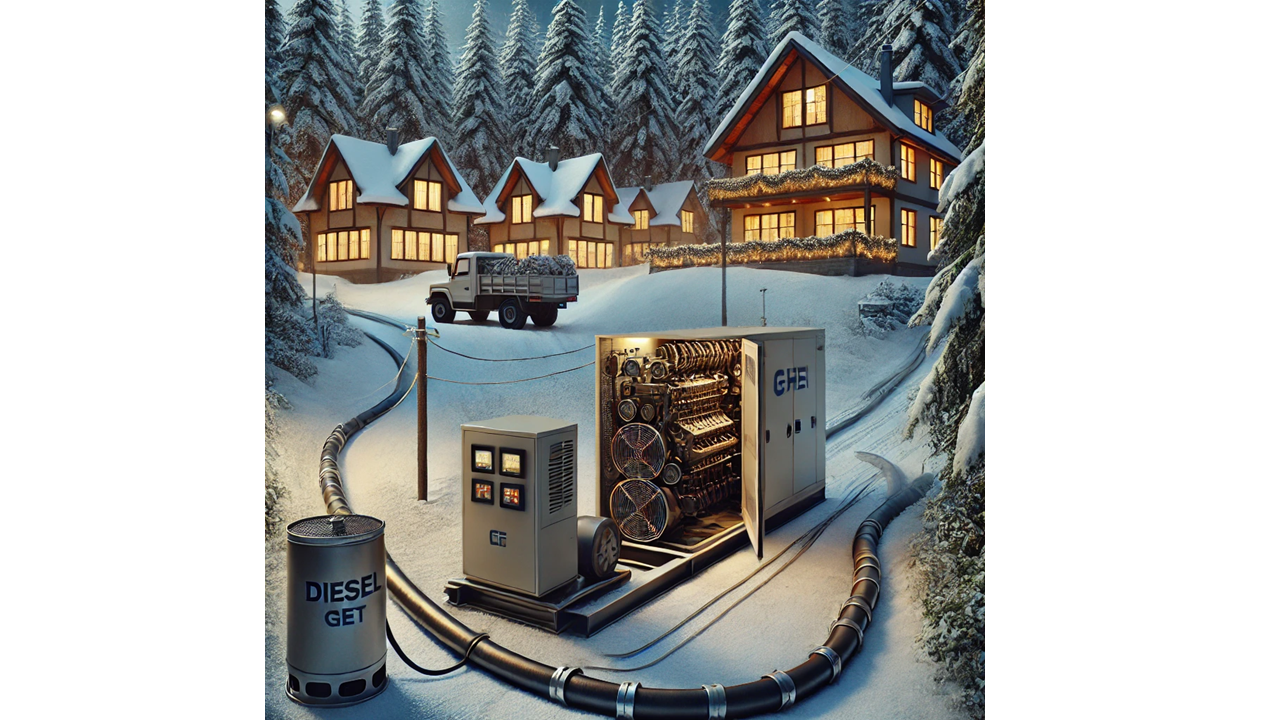
- Diesel generators are only a stopgap for Ukraine, because running one gigawatt around the clock needs about 71,000 barrels of diesel fuel per day.
- About $6 billion, or 10% of the recent US Ukraine aid package, could potentially underwrite 12 GW of generation through 50% replacement-value war risk insurance.
Gabriel Collins, J.D., Head of Energy and Geopolitics Program in Eurasia and Baker Botts Fellow in Energy and Environmental Regulatory Affairs
Kenneth B. Medlock, III, Ph.D., Senior Director and James A. Baker, III and Susan G. Baker Fellow in Energy and Resource Economics
“We have to become an energy-independent state in full.”
—Oleksiy Chernishov, CEO Naftogaz Ukraina[1]
Original Working Paper available at: Gabriel Collins and Kenneth B. Medlock, III, “Ukraine’s Electricity Sector: Urgency and Resilience in a Time of War” (Houston: Rice University’s Baker Institute for Public Policy, August 14, 2024), https://doi.org/10.25613/BC9H-J996.
Introduction
Ukraine’s electricity system faces severe challenges from persistent Russian attacks, which Moscow has significantly intensified in 2024. More than 100 cruise and ballistic missiles and at least as many Shahed kamikaze drones have struck thermal power plants, hydroelectric plants, and high-voltage substations. As Ukraine prepares for the upcoming winter, it is crucial to develop a resilient next-generation electricity system. A resilient electricity supply is certainly critical for humanitarian reasons in the near term, but longer-term global competitiveness, not to mention nation-rebuilding, is impossible without a stable supply of electrons. With that vital strategic task in mind, it is critical to outline the current challenges, short-term solutions, and long-term strategies for Ukraine’s energy sector, all of which highlight the need for international support and investment.
To begin, decentralization is a point of emphasis, especially in the short term. Ukraine’s Soviet-legacy extremely centralized power infrastructure footprint offers a plethora of high value targets for the Russian military using cruise missiles, drones, and ballistic missiles.[2] Ukraine’s military survived Russia’s early onslaught and successfully resisted in part because commanders dispersed forces before Russian strikes at war’s outset. Now, dispersion logic is also needed for the power sector. Dispersed generation capacity must be able to collectively scale up to gigawatt production levels and do so affordably. Diesel power can help Ukrainian civilians survive the coming winter and perhaps also the next but is significantly more expensive than natural gas. The cost disparity is especially meaningful in a country like Ukraine with domestic gas production that could flexibly supply a substantial portion of domestic power generation. Accordingly, gas turbines, gas piston-engines, and diesel generators whose replacement cost is insured by the US and partner governments are thus core to the solution. They can be fueled from the existing gas pipeline system and Ukraine’s highly resilient, widely distributed wartime diesel supply chain.
A successful deployment of distributed diesel and gas-fired assets hardens Ukraine against future Russian aggression—an unfortunately likely prospect[3]— and provides critical support for Ukrainians living in wartime stress. It also provides a blueprint for longer term deployment of other distributed assets, such as small modular nuclear reactors, that can provide the energy density needed to support an industrial base. Perhaps most importantly for now, gas can be installed fast and, in many cases, access high pressure systems. And with much of Ukraine’s coal-fired capacity already destroyed by Russia, each megawatt of gas-fired generation installed will emit half the carbon of its coal predecessor—meaning that by default, distributed generation will help Ukraine build back better and cleaner.
How Bad is the Damage?
The scale of challenges and opportunities alike is tremendous. A recent report from the Kyiv School of Economics estimates that since the February 2022 large-scale invasion, Russian forces have inflicted at least $16 billion in damage on Ukraine’s energy sector and that full reconstruction will likely cost more than $50 billion.[4] As Figure 1 shows, much of this cost will come from rebuilding Ukraine’s electricity system, with the bulk of that subtotal focused on power generation. Ukrainian air defenses and power system engineers fended off Russia’s initial campaign in October 2022 and through the winter of 2022-2023 through a combination of intercepting munitions, wheeling power around damaged assets, and rapid repairs.
Figure 1: Estimated Losses and Rebuild Costs in Ukraine’s Energy System

Source: Kyiv School of Economics, Author’s Analysis
As stocks of air defense weapons and grid repair equipment dwindled through 2023 and early 2024, Russia’s renewed strike campaign created dire effects. Local media indicate severe damage to dispatchable thermal power assets, with 90% destruction of DTEK’s generation capacity and full destruction of Tsentrenergo’s plants.[5] In April 2024, Russian missiles destroyed large thermal plants at Tripilska and Kharkiv.[6] From February 2022 to the present time, Ukraine’s available nationwide dispatchable electricity generation capacity has been reduced to about 1/3 of its pre-war level (Figure 2). In practice, this means electricity production capacity is now less than normal grid loads on many days—a situation that will sharply worsen as winter bites.
Exhibit 2: Russian Incursions Have Slashed Ukraine’s Electricity Production Capacity

Source: Global Energy Monitor, GEM Wiki, Local Media, Author’s Analysis
Ukraine now must ration power on many days, and it is forced to import electricity from its EU neighbors and Moldova at unprecedented levels that increasingly approaches and sometimes hits the approximately 1.7 GW technical limit for power imports (Figure 3). Such a high volume of imports is not deemed optimal for the longer term. A primary concern is that a lack of domestic self-sufficiency potentially exposes the country to systemic power deficits at times of weather shocks or other grid stressors that simultaneously impact multiple countries in the region.[7]
In short, Russia’s attacks on Ukraine’s electricity system will likely continue. Thus, efforts to help Ukraine must balance short and long-term imperatives and foundationally center on structures capable of successful multi-year operations under adverse market and physical security conditions. The next 3-to-6-month timeframe is most pressing, as Ukraine must secure power to protect its people this winter. The 12 month and longer timeframe will allow wartime emergency distributed power supplies to evolve into something that can persist for years thereafter, possibly even becoming the new power system architecture on a decadal basis. Of course, the longer-term outcome will be influenced by the evolution of the threat from Russia.
Figure 3: Ukraine’s Net Electricity Imports Now Regularly Touch Technical Limits

Source: ENTSO-E, Author’s Analysis
How Does Ukraine Forestall a Humanitarian Crisis This Winter?
The most urgent priority is to ensure that Ukrainian citizens have sufficient electricity supplies this winter. Humanitarian concerns coexist with political ones, as severe energy shortages during the coldest months could trigger a large influx of refugees into Europe at a time when patience has worn thin and right-wing, nationalist political current are on the ascent. As a warning of what the winter of 2024/2025 could hold in a worst case, Kyiv city leadership actually planned for extensive evacuations in the winter of 2022 if electricity supplies were lost.[8] A refugee crisis could erode European partners’ political will to support Ukraine in what promises to be a long war of independence, which is something Russia surely recognizes.
Assessing Acute Needs
What do Ukraine’s humanitarian electricity needs for this winter potentially look like? If we assume that Ukraine has approximately 35 million residents remaining in country and that an average household for heating purposes consists of six people as folks congregate to find heat and escape damaged or destroyed housing, this suggests approximately 6 million households. Let us then assume the following:
- 1/3 of the population in Ukraine has access to some type of distributed heating that is relatively insulated against Russian strikes,
- 1/3 of the population can access Points of Invincibility or other communal temporary heating resources, and
- the remaining 1/3 (i.e., 2 million households) must self-source their heat.
If each of these households obtains a full-room heating device that uses 1.5 kW of electricity[9], this would suggest a ballpark basic humanitarian power load on the order of 3 Gigawatts that needs to be served—about a third of Ukraine’s current electricity supply deficit. Closing that gap will be a challenge as insufficient “firm” filler resources are available at the time of writing.
Who Can Help Fill The Power Gap?
On the 6-month timeframe multiple governmental, para-statal, and commercial entities are stepping up in effort to ensure power supplies. Ukrainian Railways already supplies power to 100,000 households and plans to add 250 MW in additional distributed energy generation assets.[10] For its part, JSC Energy Company of Ukraine has signed a memorandum of understanding with powership provider Karpowership and is negotiating with other powership/barge providers to provide a total of up to 550 MW of generation capacity along Ukraine’s Black Sea coast, which in a best case could arrive this winter.[11]
Finally, Ukraine’s largest private power generator, DTEK, recently said it intends to restore 60-70% of its damaged thermal power capacity (a potential contribution on the order of 7-8 GW) by October 2024.[12] This plan is of course contingent on lack of further Russian strikes, as DTEK’s last round of heroic plant restorations in 2023 was destroyed in a subsequent round of Russian attacks in Spring 2024.[13] Recent experience thus suggests that DTEK’s desired capacity restoration number should be discounted, perhaps down to 1.5-2 GW if certain facilities become better protected by air defense units in coming months.
In addition to the corporate-level near-term power solutions described above, smaller-scale solutions are being actively deployed. USAID has already delivered at least 3,600 generators (mostly 100kW or smaller per unit) to local entities in Ukraine, as well as at least 69 neighborhood/community scale cogeneration units that can supply electricity and space heating.[14] Indeed, there appears to be ample prospect for scaling up additional turnkey resources that can be deployed in relatively short order. A simple search of firms that sell or rent large portable generators suggests thousands of units are available globally at any given time, with prices ranging from the tens of thousands into the hundreds of thousands of dollars apiece.[15] A major impediment, of course, is linked to the financial risk associated with deploying assets in a war zone.
Supplying 100,000 of the roughly 2 million “exposed” households estimated above with 3.5 kW home generators costing $500 apiece would cost $50 million.[16] For perspective, that is likely less than 5% of the annual market for portable generators in the United States.[17] It is also one that is likely well within the global generator supply chain’s production capabilities, as single enterprises in China—a key source of parts for generator manufacturers worldwide—can turn out hundreds of generator sets daily.[18]
Spending that same set of funds to rent 175kW diesel generators for communal power supply from November until March at $5,000/month plus a 25% logistics premium would mean a $50 million deployment could conceivably support 233,000 households through the winter.[19] Readers should note that these estimates include multiple assumptions amidst a fluid situation in which military activities, weather, donor appetite, and other factors both coincide and also dynamically influence one another.
Increasing the deployment to between $300 and $500 million—similar in size to multiple US arms packages sent to Ukraine—could thus potentially close a major part of the humanitarian electricity supply gap. A preference for a certain proportion of generator rentals from US firms could help ensure political support, since money would stay at home while machinery heads downrange. A potential starting number for the “reserved share” would be 33% in order to preserve a large portion of the market for firms from partner countries in Europe and Asia, many of whom are already engaged at the state-level to assist Ukraine’s energy reconstruction.[20]
But diesel generation is only a stopgap measure at the national level. Running a gigawatt of diesel-fired generation around the clock likely requires approximately 71,000 barrels of diesel fuel per day.[21] That would be equal to about 1/3 of Ukraine’s entire daily oil products demand in 2023.[22] With over 8 GW of power deficit, diesel is clearly not a long-term solution from a logistical or cost perspective, as it generally costs 3-4X as much per unit of fuel energy as natural gas does. This means natural gas is extremely important for any plan to provide Ukraine with dispersed, low-cost, dispatchable power generation.
How Does Ukraine “Build Back Stronger” To Ensure Future Energy Security?
Ukrainian energy and industrial decisionmakers are keenly focused on how to rebuild the country’s electricity system so it can be a foundation of economic growth and national security moving forward. In the next 24 months, dispatchable, scalable, and distributed power resources that are economically competitive, have secure fuel sources, and are difficult for the Russian military to target will receive the most attention. In the 2- to 5-year timeframe, similar concerns will dominate. Russia has destroyed most of Ukraine’s coal-fired power plants and coal does not lend itself well to distributed generation applications.
Accordingly, gas will be a foundational resource for Ukraine. Small gas-fired assets can be deployed at the 10 to 50-megawatt level, meaning that hundreds can be scattered around the country. They can even be containerized or made even more mobile through trailer mounting. The gas system—which is also resilient and sized to move 150 bcm per year—has many potential connection points for small turbines and piston-engine generators.
Key gas storage assets have also proven their ability to remain operational despite Russian strikes.[23] Overall, the system can provide a big uplift in gas-fired generation, especially in western Ukraine where pipelines can import gas from neighboring NATO countries. Ukraine’s GTSOU is now working with Japanese firms on an initiative to modernize the country’s gas compression, including mobile compressor turbines.[24] This will add further resilience.
Gas also facilitates “behind the meter” power generation for industrial users to support their own operations as well as supply power to the grid. And of critical importance, gas projects have solid prospects of being seen as “bankable” by investors, a step would unlock access to amounts of investment capital around the world that cumulatively exceed the totality of Ukraine’s prospective energy sector investment needs.
Senior Ukrainian officials have indicated that boosting domestic gas production, which last winter was roughly sufficient to meet the country’s needs, is a major priority.[25] To the extent that gas will be procured externally, Ukraine appears intent on locking down secure supplies delinked from Russia, as exemplified by the June 2024 Heads of Agreement signing between DTEK’s trading subsidiary and Venture Global LNG.[26]
Beyond 5 years, if small modular nuclear reactors prove scalable, Ukraine could drop significant new nuclear capacity into its energy system with the benefits of a dispatchable, weather-proof, fuel-secure, and virtually carbon-free resource. Locations in which gas projects have proven bankable may also offer locations for setting up a more distributed nuclear architecture. Extreme centralization enabled Russian forces through occupation of the Zaporizhia nuclear plant using perhaps just a few thousand soldiers to knock out nearly 1/7 of all dispatchable electricity production capacity in Ukraine. A future nuclear system with similar capacity but where older Soviet-era reactors are replaced by more modern units of between 15 and perhaps 80-100 megawatts in capacity can yield a far more resilient low-carbon power swarm.
These realities are likely to cause tensions over time with some foreign supporters, especially in the EU and US. Relative to Ukraine’s needs, the use of nuclear and natural gas-fired capacity, to replace coal, is the likely path forward. This almost certainly diverges sharply with what “green” means to certain policymakers in Brussels and Washington. But Ukraine must provide power to citizens and industry during cloudy and still Ukrainian winters, operate despite Russian bombardment of the large and visually identifiable battery parks[27] needed to make wind and solar dispatchable resources, and face farmers who ask why fertile land should be taken for turbines and solar farms.[28]
European policymakers appear more fixated on “green” while US policymakers will potentially face accusations of hypocrisy over why they potentially choose to support development of gas resources and gas-fired power generation in Ukraine, while effectively discouraging such developments in places like Sub-Saharan Africa.[29] The ultimate answer is that embracing a more source-agnostic “energy abundance” approach best facilitates US and partner country interests, but the politics of that internal philosophical transition will be challenging and choppy.[30] One key item to consider is that (1) Ukraine’s present total annual carbon emissions are approximately 0.3% of the global total and (2) with replacement of coal by gas, fossil energy usage would significantly reduce its carbon intensity.
Figure 4: Ukraine’s Carbon Emissions Are Structurally Declining and Would Benefit from Gas-for-Coal Substitution

Source: Energy Institute Statistical Yearbook of World Energy 2024, Author’s Analysis
How Can Foreign Partners Help?
Energy assistance is among the most profound steps Ukraine’s partners can undertake. It combines humanitarian benefits, hard-edged geoeconomics,[31] and the opportunity to help a dynamic and entrepreneurial society rebuild and deepen its integration with Europe and the global economy.
The most immediate step entails rapid engagement with “energy as a service” providers who can bring equipment to Ukraine, who know how to operate under adverse conditions, and who can set the stage for sequentially indigenizing the operations. US commercial firms now enjoy special expertise in expeditionary gas turbine operations gained through the rise of electrically-powered hydraulic fracturing operations in the US oil patch.[32] US entities also have deep portable generator fleets due to the needs for mobile power in the wake of natural disasters such as thunderstorms, tornadoes, and hurricanes, which taken together have disproportionately impacted the United States.[33] Multiple efforts are already underway but need to be expanded to fill the yawning humanitarian electricity supply deficit that currently looms with the onset of winter temperatures a mere 3-4 months away.
The second step is the construction of “durable” gas fired distributed generation. While diesel gensets can power neighborhoods, aeroderivative turbines can power entire towns at a much lower electricity cost. Ukraine will need gigawatts of power, which means that at an average turbine size of 25 megawatts and piston genset size of 1 MW, many hundreds of units will be required. With UkrTransGaz claiming operation of nearly 40,000 km of gas pipelines and 1,455 gas distribution stations, there is ample infrastructure and connection points for both piston gensets and turbines.[34] Past research has also suggested that Ukraine has 100,000 boilers deployed around the country, with at least half of boilers using gas as a fuel. Data from a major Ukrainian boiler manufacturer shows that the hourly gas consumption of an industrial boiler making 2.5 tonnes of steam per hour is about the same as what’s needed to run a 1 MW piston-engine genset.[35] This, in turn, suggests thousands of potentially available industrial gas connections.
Risk Mitigation
Physical Dispersion & Passive Protection
Russia will likely target newly deployed generation assets. But their far more widespread nature of distributed generation assets will put Russian forces on the wrong side of economics and physics. The April 2024 strike that destroyed the 1,825 MW Tripilska power station near Kyiv used 11 missiles (likely $25-30 million’ worth) and destroyed 1,825 MW of centralized generation capacity worth billions of USD—amounting to a strike cost of ~$16,500 per MW destroyed. Imagine instead Russian targeters having to find and destroy 50-100 gas turbine gensets (20-40 MW apiece) scattered around Ukraine. Munitions requirements rise significantly, assuming 1-2 munitions are tasked per asset. This means using the same types of missiles could now cost multiple millions of dollars per MW of generation capacity destroyed. To strike these assets, Russia would likely rapidly have to turn to Shahed-type drones, which Ukrainian air defenders can often intercept using low-cost, gun-based defenses.[36]
Generators can also be sited behind blast walls or in revetments to complicate Russian targeting decisions. In certain cases, power plants could even be sited underground—as South Korea has done with a major gas-fired plant in Seoul.[37] Underground location would be most appropriate for urban combined heat and power facilities that need to be physically sited close to communal heating infrastructure. While the time to deploy makes this option unlikely for the coming winter, the option could serve a resilience purpose longer term.
Figure 5 – Distributed Facilities Can Also Be Protected More Easily

Source: Left panel – by US Air Force, 130815-F-MF529-068, Public Domain, https://commons.wikipedia.org/w/index.php?curid=50925653; Right Panel – https://media.defense.gov/2010/Feb/09/2000396191/-1/-1/0/100201-F-0168M-279.JPG
War Risk Insurance
The Next 3 Months
Different subsets of the market will require tailored solutions. The simplest bucket are large industrial entities such as InterPipe and ArcelorMittal, who seek to avoid idling multi-billion-dollar facilities. The Ukrainian government might consider allowing them to continue purchasing electricity from the grid at lower industrial tariffs in exchange for them paying to install distributed generation systems near their plants or funding the same amount of distributed capacity elsewhere on the grid.[38]
Another short-term solution would entail granting distributed generation providers guaranteed power purchases at a multiple of prevailing electricity prices (perhaps using the cost of power imported from EU neighbors as a benchmark). Self-contained incentives for mobile generator deployment could also maximally leverage such providers’ in-house installation capabilities, reducing the need to call upon EPC contractors thereby avoiding the associated labor costs and prolonged timelines.
In the next 3-6 months, the Ukrainian government might also consider indemnifying the first mover distributed generation providers. As part of the process, multinational lenders or the US government could issue Ukraine low-interest loans or grants specifically earmarked for ensuring electricity supplies. Assuming an average generator cost of $2 million per megawatt, a $250 million loan would allow Kyiv to underwrite the first 250MW of generation deployed on the basis of “if your generator set gets destroyed, we will write you a check for 50% of its replacement value.”[39] For simple aeroderivative turbines, the base overnight costs could be half that amount.[40]
To minimize risk and ensure distributed generation deployment, the initial insurance tranche could stipulate that only projects sized 25MW or smaller are eligible for coverage. Russian forces would almost certainly intensively hunt the first assets deployed under the program, but wide dispersal would offer strong protection. The resulting real-world risk data would simplify the process of additional war risk insurance from partner countries as well as position Kyiv and its allies to make a more robust case to private sector insurers they can participate in the market. An initial Ukrainian-run self-insurance pilot program would also politically demonstrate skin in the game, a potentially important dynamic.
The Next 6 Months and Beyond
The global private political risk insurance market could collectively cover nearly $4 trillion of risk as of February 2024, according to WTW.[41] But most companies tend to write political risk coverage in smaller bites (typical lines of $10 to $40 million). Furthermore, while they may be happy to cover existing mining, oil & gas, and data center assets for longstanding customers or firms dealing in places with “typical” risk such as Sub-Saharan African states, they will likely be less willing to write initial policies for generation assets that a major nation state military will try to find and target.
Sovereign political risk insurance providers will play a critical role in laying the risk management foundations that Ukrainian distributed power generation providers will need in 6 months, 18 months, and beyond. The US government’s Development Finance Corporation (DFC) stands out as a leader. It already has a $1.6 billion overall portfolio exposure to Ukraine, including nearly $850 million in new projects taken on since 2022.[42] Even more pointedly, DFC announced in June 2024 a financing package that included $357 million in political risk insurance for several entities in Ukraine, including $152 million for a manufacturing firm’s operations in Ukraine.[43]
Large manufacturing facilities are likely at least as (and perhaps more) vulnerable to Russian strikes as dispersed generation assets. It is also not DFC’s first foray into ensuring major energy/industrial assets in an active conflict zone, as DFC’s board in 2020 approved issuing $1.5 billion in political risk insurance to the Rovuma LNG project in Mozambique—a country with an active and violent Islamist insurgency.[44] Accordingly, DFC’s risk appetite and willingness to ensure asset packages that would fall at the very top end of (and sometimes handily exceed) lines private insurance firms would be willing to issue bodes well for its capacity to underwrite a meaningful portion of the gigawatts of cumulative distributed generation capacity Ukraine will need to restore full electrical system integrity.
DFC and other sovereign lenders might also consider offering loan portfolio guarantees to banks who are willing to fund distributed generation deployment projects. Ukrainian market participants and policymakers clearly understand the need for commercially “bankable” projects, and all sides would benefit from initial sovereign de-risking that, if effective, could unlock a multiple in private capital as projects progress and risk understanding and appetites evolve. Loan guarantees could be offered to intrepid foreign capital providers as well as local Ukrainian banks. In practice, lending to distributed generation projects could take the shape of consortia combining foreign banks’ deep balance sheets and global capital access with Ukrainian financiers’ intimate knowledge of local market conditions.
While such state-backed insurance options might initially seem expensive from a taxpayer perspective, presenting them relative to the costs that might otherwise be incurred reframes the view. Put bluntly, how many mobile turbines could be replaced for the cost of a Patriot air defense missile battery (i.e. $1 billion)? This question matters because large, fixed assets like traditional power plants are magnets for Russian missiles and demand high-end air defense capabilities that are in short supply (as well as needed by Israel, Taiwan, and US forces themselves). At USD 1 million per MW, a billion dollars from the US could underwrite 2 Gigawatts of generation capacity (assuming 50% replacement value payments if units destroyed).
This means 10% of the recent Ukraine aid package (a/k/a $6 billion) could potentially underwrite installation of 12 GW of generation capacity.[45] In simplest terms, the US alone could de-risk a transformative level of private power investment in Ukraine for years to come. European governments will also have strong incentives to participate, with firms like Siemens, Tedom, and Wartsila that could provide piston-engine generators and turbines. The Japanese and South Korean governments will be similarly incentivized, with the cumulative impact of Ukrainian generators having access to a large, globalized industrial base that can replace strike losses and support expansions so long as market signals stimulate the necessary supply chain and production investments. Eventually, Ukrainian turbine producers such as Zorya Mashproekt would also be able to serve as suppliers. Over time, as the power system becomes more distributed and hardened, the underwrite risk decreases because Russia’s rate of return from strikes on power plants diminishes.
Conclusion
Energy security is national security. Distributed energy equipment and services is a battlespace in which the US and its partners enjoy substantial competitive advantages. By accessing these, Ukraine can break the current unsustainable cycle of trying to rebuild expensive facilities using a finite pool of Soviet-legacy parts scrounged from around the world, only to have Russia then restrike with missiles that cost far less than the facilities they are disabling and destroying.
Ukraine is an unprecedented test case for building a power system that is future-oriented and resilient in the face of a persistent, high-end threat. No other country—even Israel or South Korea—must run its electricity grid while confronting the combination of capability and willingness to strike that Russia has displayed. While a ceasefire of some type will eventually come, the Russian threat of renewed military action will likely continue for the foreseeable future. Ukraine cannot wait long to ensure human wellbeing and rebuild its economy. It thus must take steps now.
Kyiv and its coalition of allies and partners from across the Western world are fully capable of prevailing. Indeed, their ability to turn Ukraine’s energy needs into a commercial opportunity capable of unlocking hundreds of billions of dollars in investment capital and industrial base assets will make the distributed power effort more politically sustainable than mass scale provision of weapons has been. It might also yield learnings and best practices that feed back into places like the US that now struggle with power grid stability that, while not caused by hostile action, is nonetheless extremely disruptive to lives and markets. Разом до перемоги (together to victory)!
Frequently asked questions
Why is distributed power generation better for Ukraine than rebuilding large power plants?
Distributed generation is cheaper to protect and far costlier for Russia to destroy. Russia’s April 2024 strike on the 1,825 MW Tripilska plant used 11 missiles, about $16,500 per MW destroyed. Hunting 50-100 scattered gas gensets of 20-40 MW each could cost Russia multiple millions of dollars per MW using the same missiles.
How much damage has Russia done to Ukraine’s energy sector?
The Kyiv School of Economics estimates Russian forces have inflicted at least $16 billion in damage on Ukraine’s energy sector since February 2022, with full reconstruction likely costing more than $50 billion. Dispatchable generation capacity has fallen to about 1/3 of its pre-war level, and imports approach the roughly 1.7 GW technical limit.
Why do the authors favor natural gas over diesel for Ukraine’s power?
Natural gas is cheaper and logistically sustainable at gigawatt scale, while diesel is a stopgap. Diesel generally costs 3-4X as much per unit of fuel energy, and one gigawatt of diesel generation needs about 71,000 barrels per day, roughly 1/3 of Ukraine’s 2023 daily oil products demand. Ukraine also has domestic gas production and an extensive pipeline network.
How could war risk insurance help Ukraine build new power generation?
Sovereign war risk insurance would reimburse generator owners if Russia destroys their assets, making projects bankable. The authors suggest a $250 million loan could underwrite the first 250 MW at 50% replacement value, limited to projects of 25 MW or smaller. The US Development Finance Corporation already holds $1.6 billion in Ukraine exposure.
Endnotes
[1] https://kyivindependent.com/naftogaz/
[2] Gabriel Collins, “An Electricity Strategy for Long War in Ukraine.” Collins Research Portal, July 2, 2024. https://collinsresearchportal.com/2024/07/02/an-electricity-strategy-for-long-war-in-ukraine/.
[3] Gabriel Collins and Steven R. Miles, “Why Is Europe Not Replacing Russian Pipeline Gas With Long-term LNG Contracts?” (Houston: Rice University’s Baker Institute for Public Policy, September 13, 2023), https://doi.org/10.25613/3FRC-FA56.
[4] Kyiv School of Economics. Ukrainian Resilience and Reconstruction Conference 2024. Kyiv: DTEK, 2024. https://dtek.com/content/upload/urc/Kyiv%20School%20of%20Economics_2024.pdf.
[5] “Виробництво електроенергії в Україні 2024: де та як відбувається.” Fakty. Last modified July 3, 2024. Accessed July 3, 2024. https://fakty.com.ua/ua/ukraine/20240703-vyrobnycztvo-elektroenergiyi-v-ukrayini-2024-de-ta-yak-vidbuvayetsya/; DTEK. “DTEK Thermal Power Plant Was Hit in a New Wave of Russian Attacks, Three Workers Injured.” DTEK, July 3, 2024. https://dtek.com/en/media-center/news/dtek-thermal-power-plant-was-hit-in-a-new-wave-of-russian-attacks-three-workersinjure/.
[6] Insert source
[7] This concern was raised by multiple participants during a private roundtable discussion focused on short- and long-term energy sector needs in Ukraine. The meeting was held under Chatham House rule at the Baker Institute.
[8] Bubola, Emma, and Marc Santora. “Kyiv Confronts Multiple Infrastructure Crises as Russia Targets Ukraine’s Power Grid.” The New York Times, November 5, 2022. https://www.nytimes.com/2022/11/05/world/europe/kyiv-ukraine-electricity-russia-infrastructure.html.
[9] De’Longhi. “Dragon Radiant Full Room Heater with Timer.” Accessed July 9, 2024. https://www.delonghi.com/en-us/dragon-radiant-full-room-heater-with-tos/p/TRD40615T-6A.
[10] Interfax. “Ukrainian Railways to Build 250 MW Gas-Fired Power Plants.” Last modified June 28, 2024. https://interfax.com/newsroom/top-stories/103840/
[11] PR Newswire. “Karpowership and Ukraine Sign Energy Cooperation MoU to Ease Power Crisis.” Last modified January 9, 2023. https://www.prnewswire.co.uk/news-releases/karpowership-and-ukraine-sign-energy-cooperation-mou-to-ease-power-crisis-301730926.html. Notably, while Russian forces might be hesitant to directly strike ships operated by the Turkish firm Karpowership given the relationship between Ankara and Moscow, the onshore fueling and power offtake infrastructure could be seen as a target of opportunity, so this development bears close watch.
[12] Censor.NET. “Skilky Teplovykh Elektrostantsii DTEK Planuye Vidnovyty do Zymy.” Last modified 2024. https://mbiz.censor.net/news/3501202/skilky_teplovyh_elektrostantsiyi_dtek_planuye_vidnovyty_do_zymy.
[13] Chicago Style:
DTEK. “DTEK Thermal Power Plant Was Hit in a New Wave of Russian Attacks. Three Workers Injured.” Last modified June 20, 2024. https://dtek.com/en/media-center/news/dtek-thermal-power-plant-was-hit-in-a-new-wave-of-russian-attacks-three-workersinjure/.
[14] USAID. “Energy Assistance: USAID Ukraine Factsheet.” Last modified June 2023. https://www.usaid.gov/sites/default/files/2023-06/Energy_Assistance_USAID_Ukraine_Factsheet.pdf.; see also USAID Energy Security Project. “USAID Energy Security Project Delivered 667 Generators for the Needs of Local Councils and District Heating Utilities.” Last modified March 24, 2023. https://energysecurityua.org/news/usaid-energy-security-project-delivered-667-generators-for-the-needs-of-local-councils-and-district-heating-utilities/; USAID Energy Security Project. “69 Cogeneration Units for 23 District Heating Utilities and Two Universities This Winter: New Support to Ukraine from USAID Energy Security Project.” Last modified June 23, 2023. https://energysecurityua.org/news/69-cogeneration-units-for-23-district-heating-utilities-and-two-universities-this-winter-new-support-to-ukraine-from-usaid-energy-security-project/.
[15] See, for instance: Machinery Trader. “Search Results for Category: Generators, Horsepower: 75*.” Accessed July 9, 2024. https://www.machinerytrader.com/listings/search?Category=153001&Horsepower=75%2A.
[16] Cost estimate based on author’s personal experience donating a generator to a family in Ukraine.
[17] See, for instance: Global Market Insights. “U.S. Portable Generators Market Size, Share and Industry Analysis Report, 2024 – 2032.” Accessed July 30, 2024. https://www.gminsights.com/industry-analysis/us-portable-generators-market.
[18] Lingben. “5kw 6kw 7kw 5kVA 6kVA 7kVA Gasoline Petrol Power Electric Engine Generator.” Made-in-China. Accessed July 30, 2024. https://lingben-generator.en.made-in-china.com/product/CyNndtgHwFWo/China-5kw-6kw-7kw-5kVA-6kVA-7kVA-Gasoline-Petrol-Power-Electric-Engine-Generator.html?pv_id=1i4f4v0rj739&faw_id=1i4f4vteq6f9; Alibaba. “Silent Portable Petrol Generator 3kw Electric Start Small Generator for Home Use.” Accessed August 4, 2024. https://www.alibaba.com/product-detail/Silent-Portable-Petrol-Generator-3kw-Electric_1600737231139.html?spm=a2700.galleryofferlist.p_offer.d_title.7d5564aedWmb4w&s=p.
[19] Sample rental rate obtained from Cresco Equipment Rentals. “175 kW Diesel Generator.” Accessed July 9, 2024. https://www.crescorent.com/equipment-rentals/175-kw-diesel-generator/.
[20] Government Offices of Sweden. “Sweden Continues to Support Ukraine’s Energy Supply and Resilience.” Last modified July 22, 2024. https://www.government.se/press-releases/2024/07/sweden-continues-to-support-ukraines-energy-supply-and-resilience/
[21] 1 Gigawatt of generation capacity running for a 24-hour day
generates 24 GWh of electricity. In raw heat terms, 1 GWh = 3412 BTU/kWh * 10^6 kWh/GWh.
(https://unit-converter.gasunie.nl/). Adjusting for 20% piston engine thermal efficiency means
3.4*10^9 BTU x 5 or 17 *10^9 BTU per GWh generated. Diesel fuel contains approximately 137,000 BTU/gallon. Thus, 17 billion BTU = 124,525 gallons or 2,964 barrels of diesel per GWh. Multiplied by 24 hours in a day, that means 71,157 barrels per day.
[22] Energy Institute. “Statistical Review of World Energy.” Accessed July 9, 2024. https://www.energyinst.org/statistical-review.
[23] See, for instance: Reuters. “Ukraine Boosts Power Imports After Russian Attack, Losing Generation Capacities.” By Pavel Polityuk, March 24, 2024. https://www.reuters.com/business/energy/ukraine-boosts-power-imports-after-russian-attack-losing-generation-capacities-2024-03-24/.
[24] Government Portal of Ukraine. “Japan to Help Ukraine Modernize Gas Compressor Stations and Implement Mobile Turbines.” Accessed July 9, 2024. https://www.kmu.gov.ua/en/news/yaponiia-dopomozhe-ukraini-u-modernizatsii-hazovykh-kompresornykh-stantsii-ta-vprovadzhenni-mobilnykh-turbin.
[25] Kateryna Hodunova, The Kyiv Independent. “Shmyhal: Ukraine Targets to Produce 15 Billion Cubic Meters of Gas in 2024.” Last modified July 9, 2024. https://kyivindependent.com/shmyhal-ukraine-targets-to-produce-15-billion-cubic-meters-of-gas-in-2024/.
[26] DTEK. “D.Trading Signs Landmark Agreement with Venture Global Aimed to Boost Energy Security in the EU.” Accessed July 9, 2024. https://dtek.com/en/media-center/press-releases/dtrading-signs-landmark-agreement-with-venture-global-aimed-to-boost-energy-security-in-the-eu/.
[27] Battery parks near wind and solar facilities in Texas and other US states are easily findable using commercial satellite imagery. Russian targeters could certainly locate them and once they were fixed, the flammable lithium ion batteries would be highly vulnerable to blast and shrapnel from drone and cruise missile warheads.
[28] Stern, David L. “Ukraine’s Green Power Push Faces Steep Challenges Amid War Rebuild.” The Washington Post, July 5, 2024. https://www.washingtonpost.com/world/2024/07/05/ukraine-green-power-rebuild-energy/.
[29] Moss, Todd. “Europe Wants African Fossil Fuels, but Won’t Fund Them.” Foreign Policy, July 14, 2022. https://foreignpolicy.com/2022/07/14/europe-africa-energy-crisis-gas-oil-fossil-fuels-development-finance-hypocrisy-climate-summit-world-bank/.; see also U.S. Department of the Treasury. “Fossil Fuel Energy Guidance for the Multilateral Development Banks.” Last modified August 16, 2021. https://home.treasury.gov/system/files/136/Fossil-Fuel-Energy-Guidance-for-the-Multilateral-Development-Banks.pdf.
[30] Gabriel Collins, “A US-Led Energy and Food Abundance Agenda Would Reshape the Global Strategic Landscape” (Houston: Rice University’s Baker Institute for Public Policy, April 11, 2024), https://doi.org/10.25613/k0mb-7y09
[31] Collins, Gabriel, and Anna Mikulska. “Gas Geoeconomics in Europe: Using Strategic Investments to Promote Market Liberalization, Counterbalance Russian Revanchism, and Enhance European Energy Security.” Baker Institute for Public Policy, Rice University, 2018. https://www.bakerinstitute.org/research/gas-geoeconomics-europe-using-strategic-investments-promote-market-liberalization-counterbalance.
[32] See, for instance: NOV. “Ideal eFrac Fleet.” Accessed July 9, 2024. https://www.nov.com/products/ideal-efrac-fleet and YouTube. “Baker Hughes Electric Fracturing and Gas Turbines.” Posted by Baker Hughes, March 14, 2023. Video, 15:23. https://www.youtube.com/watch?v=_OJZ3YOViH4.
[33] Swiss Re Institute. “sigma 1/2024: Natural Catastrophes in 2023: The Year in Figures.” Accessed July 9, 2024. https://www.swissre.com/institute/research/sigma-research/sigma-2024-01.html.
[34] https://www.europeangashub.com/wp-content/uploads/attach_159.pdf
[35] https://case-ukraine.com.ua/content/uploads/2018/09/2.pdf; https://energetik.ua/en/catalog/parovi_kotly/e-0-9-gaz-mazut/
[36] Trevithick, Joseph. “Ukraine Using Thousands of Networked Microphones to Track Russian Drones.” The War Zone, February 12, 2024. https://www.twz.com/land/thousands-of-networked-microphones-are-tracking-drones-in-ukraine.
[37] Overton, Thomas. “Korean Utility Plans First Underground Combined-Cycle Power Plant.” Power Magazine. Last modified October 21, 2013. https://www.powermag.com/korean-utility-plans-first-underground-combined-cycle-power-plant/.
[38] Interfax-Ukraine. “ArcelorMittal Kryvyi Rih Calls on Govt to Prevent Introduction of Unified Tariff for Electricity Distribution.” Last modified July 29, 2024. https://en.interfax.com.ua/news/economic/1000440.html
[39] U.S. Energy Information Administration. “Table 8.2: Electricity Market Module Assumptions.” In Assumptions to the Annual Energy Outlook 2023. 2023. https://www.eia.gov/outlooks/aeo/assumptions/pdf/table_8.2.pdf.
[40] Ibid.
[41] WTW. “Credit and Political Risk Insurance Capacity Survey and Market Update 2024.” Last modified March 2024. https://www.wtwco.com/en-gb/insights/2024/03/credit-and-political-risk-insurance-capacity-survey-and-market-update-2024.
[42] DFC. “DFC in Ukraine.” Last modified 2024. https://dfcgov.my.canva.site/dfc-in-ukraine
[43] U.S. International Development Finance Corporation. “DFC Announces $357 Million in New Political Risk Insurance in Ukraine as Russia’s Invasion Threatens Critical Private Investment.” Last modified June 12, 2024. https://www.dfc.gov/media/press-releases/dfc-announces-357-million-new-political-risk-insurance-ukraine-russias.
[44] U.S. International Development Finance Corporation. “DFC Approves $3.6 Billion of New Investments in Global Development in Largest Quarter Ever.” Last modified September 9, 2020. https://www.dfc.gov/media/press-releases/dfc-approves-36-billion-new-investments-global-development-largest-quarter.
[45] U.S. Department of Defense. “Biden Administration Announces Historic New Security Assistance Package for Ukraine.” April 23, 2024. https://www.defense.gov/News/Releases/Release/Article/3757794/biden-administration-announces-historic-new-security-assistance-package-for-ukr/.


Leave a Reply