Politicians sell spin; physical commodity markets deliver reality
When political rhetoric and phantom ships crash into physical commodity supply balances, things can get interesting. The rhetoric usually loses.
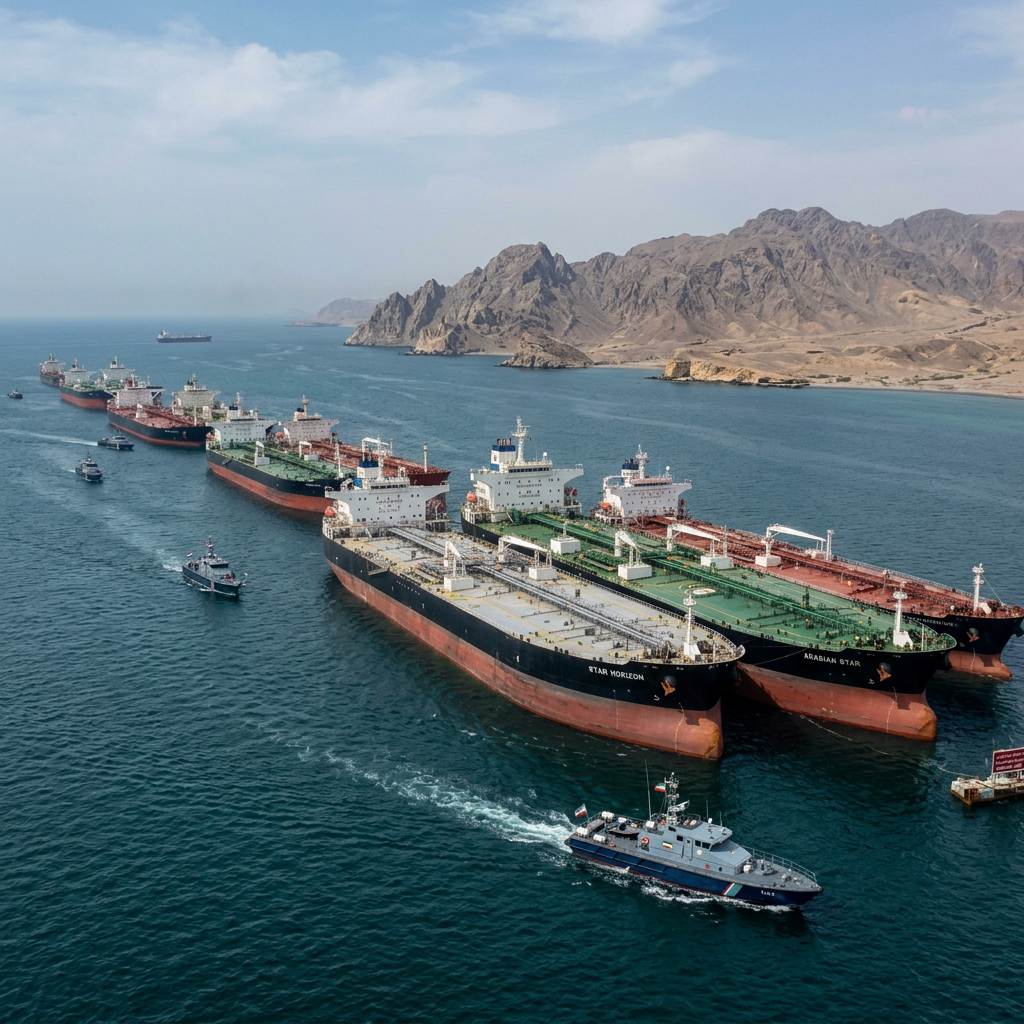
First, the political claim: oil transits through the Strait of Hormuz are being substantially restored through concerted U.S. action. That would be awesome—if we saw more signs of this showing up in the market.
But key signals are not encouraging. The crack spread for 10 ppm Singapore gasoil—a regional benchmark middle distillate product—sits at a median of $16.32/bbl across the 111 matched Singapore 10 ppm and Dubai crude price observations I’ve plotted since 2018. For reference, “middle distillates” include diesel fuel, kerosene, and jet fuel. In our illustrative case, if Dubai crude trades at $100 and gasoil at $116 per barrel, the simple 1:1 gasoil crack is $16 per barrel.[i]
The crack is a rough indicator of a refiner’s incentive to process crude oil into a gasoil, not an actual measure of refinery profit. Readers should note that refining one barrel of crude does not yield one barrel of gasoil. Rather, it fractionates into gasoil, naphtha/gasoline, light ends, and heavier derivatives closer to asphalt in consistency. This slate of products varies by crude oil and by the depth of the refining process.
When crude oil feedstock becomes scarce, refineries may cut runs. This reduces the amount of available refined products, including gasoil. If oil product demand does not fall proportionately, product prices can rise faster than crude benchmarks, widening crack spreads. This happened in 2022 when Russia launched its full-scale invasion of Ukraine, causing buyers to temporarily reduce their liftings of Russian oil as they sorted out reputational and sanctions risks.
Middle distillate inventories were already low, amplifying price pressure as reduced refinery output met continued demand for products. Gasoil traded in Singapore approached a per barrel value about 50% higher than the Dubai crude benchmark.
Yet that upswing paled compared to what happened when U.S. and Israeli forces attacked Iran beginning on 28 February 2026 and Iran responded by firing at and interfering with vessels transiting the Strait of Hormuz. This cause-and-effect chain triggered what the IEA called the largest crude oil supply disruption in human history.
Southeast Asian countries, many of which have limited domestic oil refining and product storage capacity, were hit hard as shrinking crude supplies forced refiners to partially shut down their plants. By early April, the gasoil crack spread ballooned and gasoil became more than twice as valuable as the Dubai crude benchmark.
The crack spread calmed after the U.S.-Iran ceasefire but remained high, and now that the situation has deteriorated into a “peace-fire,” the spread has spiked back up to levels that, relative to underlying crude oil price levels, are higher than anything seen during the Russia-Ukraine War thus far.
By 13 July, the crack had rebounded to $53.42 per barrel. With Dubai at $68.15, that spread equaled 78.4% of the crude benchmark—above the roughly 50% peak observed during the 2022 shock, although not above every 2022 observation in absolute dollar terms.
The 2026 Hormuz shock also created a more acute physical feedstock constraint for refineries in Asia than the 2022 disruption did.

To test the Singapore gasoil-Dubai crude crack spread story, I also pulled data for diesel fuel retail prices in and near Manila and crude oil prices reported by the Philippines Department of Energy. While retail diesel prices and the wholesale gasoil prices are not perfectly comparable, each one’s respective relationship to crude oil pricing in its jurisdiction showed the same trend—enduring tight crude oil supplies. For the region overall, the lion’s share of crude oil supplies come from the Gulf region and much of that (at least historically), passes through the Strait.
Senior U.S. officials may want to tell a story of restored flows and U.S. power getting the upper hand. Physical markets tell a much less reassuring tale: Iran retains significant leverage over oil transit through Hormuz.
This Iranian chokehold is a temporary situation and will ultimately be a wasting asset as more bypass pipelines are built. But in the coming months, and probably for a couple of years at least, elevated uncertainty will be the new normal for crude transit through Hormuz.
Suggested Citation: Gabriel Collins, “Singapore Crack Spreads Reflect Iran’s Leverage Over Hormuz Oil Flows,” The Sinews of Civilization, Substack, 21 August 2026. https://gabrielcollins.substack.com/p/physical-oil-iran-control-hormuz


Leave a Reply