Summary
In this 2020 essay, written after the “Resilience in the Energy Transition” panel at a 30 September 2020 conference, Gabriel Collins argues that the energy transition needs “silver buckshot” rather than a silver bullet: choosing winners by fiat will likely yield a fragile outcome. Energy binds together civilization’s three-legged stool of water, food and energy, and much of the world still lacks reliable, affordable supply. His ten takeaways include strategic patience, since fossil fuels cannot be eliminated in a few years while keeping energy affordable; the reminder that past transitions took 100 to 200 years; a nested series of transitions away from coal, toward cleaner gas, deeper electrification and less oil-intensive transport; a focus on energy that is accessible, affordable, big, concentrated and distributed; the observation that divestment, like bankruptcy, usually keeps assets running under new owners; and the case for energy agnosticism as a source of resilience.
Full text of the essay (from the PDF)
10 Key Dimensions of a Resilient Global Energy Transition
Gabriel Collins, J.D., Baker Institute for Public Policy *Note*: These remarks are exclusively my personal opinions and assessments and do not reflect any official positions of Rice University or the Baker Institute for Public Policy This piece fleshes out ideas I did not have sufficient time to share during the “Resilience in the Energy Transition” panel of the “Pandemic, Price War, and Other Disruptions: Resilience in Energy Systems” conference, 30 September 2020
Introduction A rifle firing a single bullet at a flock of moving birds will yield much less meat than a shotgun shell releasing a cloud of pellets indifferent as to which bird they might take down. The same logic applies to the energy transition: choosing “winners” by fiat will very likely yield a sub-optimal, fragile outcome that puts the wellbeing of many energy consumers and the environment at risk. As former acting EPA Administrator and longtime energy policy practitioner Robert Fri put it in a 2010 article “There’s no silver bullet, only silver buckshot…successfully dealing with our energy problems requires a diverse portfolio of technologies.”
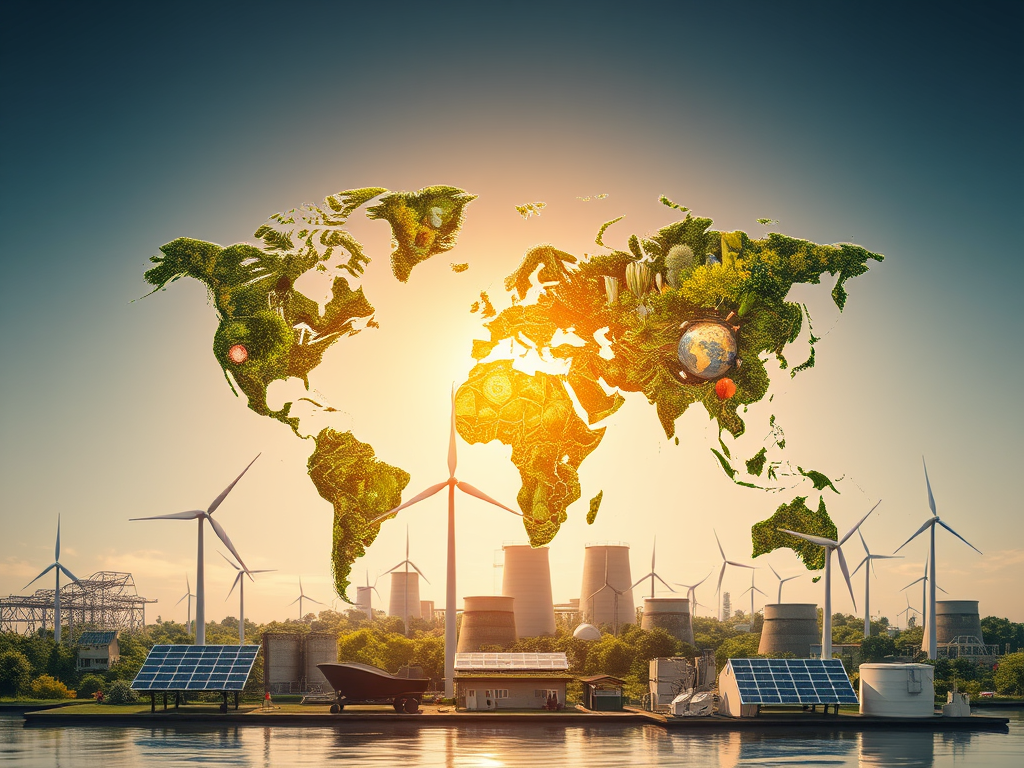
The stakes for our decision making are high because the energy challenge transcends national borders and is existential. Civilization stands on a three-legged stool (water, food, and energy) and energy binds the legs together to allow humanity to obtain water and food at the scale necessary to sustain modern life. Significant parts of the world still lack access to reliable, affordable, and scalable energy sources, with commensurate negative impacts on their water, food, and environmental security. Accordingly, energy transition dynamics may end being substantially different within the “haves” (OECD countries) and “have-nots” (or “don’t yet have enoughs”) in the non-OECD countries.
The emerging energy solutions portfolio must address this complex brew of challenges. But even the most clairvoyant among us generally will not know ahead of time what energy sources will ultimately emerge atop the heap 10-to-20 years hence in response to dynamic national and global conditions. The U.S. shale boom is a case in point. Amidst the polarized energy transition discussion here in the U.S. and beyond, it’s easy to overlook how profoundly the industrialized sourcing of “stock”-based energy sources (a/k/a fossil and nuclear) has transformed our lives over the past two centuries. In the OECD world—and a growing portion of the non-OECD–we have clean water readily available, ubiquitous climate control, cars instead of horses, no more axe blisters from wood chopping, and generally abundant, affordable electricity supplies to run the multitude of digital systems in our lives. Thank you to the energy sector—in all its forms and sources—for making these improvements to human wellbeing possible! But at the same time, scrutiny is warranted. The reason for the toughness is two-fold. First, my professional mission is to help “elevate the conversation,” which sometimes demands a dissenting voice. Second, on a personal level I want new sources to succeed in a scalable, environmentally and economically sustainable way that ensures a healthy, prosperous world for our children and grandchildren in the developed and developing world. Stress-testing new approaches helps us fulfill our vital obligation to be a stout bridge between the worlds of ideas and action and effectively assist policymakers grappling with the global energy challenge. Let the competing technological and policy pellets fly!
10 Key Takeaways
1. Strategic patience needed—you can’t eliminate cattle (i.e. fossil fuels) over a few short years’ time and still expect hamburgers (accessible and affordable energy) to be available.
◦ A rapid energy revolution is most likely not in the cards, but even the most zealous advocates of quickly extirpating carbon from the world’s energy system still expect the lights to stay on, phones and EVs to charge, etc. They, like all other global energy users, prefer—indeed, demand–a reliable system.
◦ Green New Dealers would, metaphorically speaking, like to severely curtail raising cattle and operating feedlots and slaughterhouses (i.e. upstream carbon energy production activity) but still want to be able to eat steaks and burgers (i.e. have reliable energy).
3 The problem is that the world does not yet have enough alternative meat sources to replace the lost cattle—and it likely will be many years until it does.
◦ Change will need to be incremental to be sustainable. Removing carbon-centric capital assets with services lives of 20+ years from the system in less than 10 years while eliminating the livelihoods of millions of people across the U.S. and globally is simply not a viable approach. Subsidies pushing forward high cost green technologies may increase jobs in those sectors but at significant cost to the broader economy.
◦ Policymakers must also consider the reality that emissions restrictions imposed through a coercive regulatory process risk fueling further populist backlash in both Europe and the United States. Policy measures stateside will also potentially need to survive scrutiny by a 6-3 conservative majority in the U.S. Supreme Court, assuming that Amy Coney Barrett is confirmed by the U.S. Senate later this month.
◦ Moreover, the developing world is looking for greater access to energy and faster economic growth and their preferences for trade-offs between global environmental challenges and national/local income will be different than that of Europe, US, Canada and Japan.
2. The global energy system is in perpetual transition, but change usually takes longer than we want o Moving from wood-dominance to coal took about 200 years and coal-to-oil took about 100 years.
4 A transition to a more carbon-neutral energy architecture is also likely to require a century (measured from oil’s ascendance to the world’s dominant energy source in the 1960s). Carbon-based fuels (and nuclear to a lesser extent) are the flywheels of the global energy system. Decelerating them prematurely risks setting the stage for economic and strategic instability.
3. A “nested” series of energy transitions is underway. Transition 1: The movement away from coal. Well-established in the OECD, but not so much in China and India. If the global geopolitical environment continues to darken, it will likely be harder to slow down and roll back the Asian titans’ deeply embedded coal consumption and China’s large-scale construction of coal-fired power plants in multiple non-OECD countries as part of the Belt and Road Initiative.
Transition 2: Making the production, transportation and use of natural gas less carbon-intensive. This transition is in a nascent stage, but is very important given that gas is presently the most scalable replacement for coal as a baseload energy source—with evidence from the U.S. and Europe showing this transition is compatible with energy affordability and system reliability. Modern, modularized nuclear power could begin competing with gas a decade from now. Transition 3: Deeper electrification. This process is at an early stage. Electricity is the most fungible energy source. Anything that can spin a dynamo (or bump electrons from a photovoltaic matrix) can generate electricity. But it takes time to more deeply electrify, especially for industrial processes in the metals and other sectors where a single plant can consume quantities of heat that would require what tens of thousands of homes simultaneously use. Power grids will need beefing up and restorative maintenance to accommodate these new loads. Transition 4: Making transportation less oil-intensive. Personal EVs still have not scaled up enough to be globally impactful from a fuel substitution and emissions reduction perspective. Freight movers are even tougher to electrify because the batteries have to be huge. An open technology competition could yield real benefits here as firms like Tesla seek to improve battery range, while others like Electreon pursue wireless “on the go” charging, and still others like Toyota emphasize fuel cells.
Transition 5: Addressing energy poverty. An estimated 3.5 billion people— roughly 45% of the global population—still do not have access to reliable and affordable electricity.
8 As underserved populations seek access to modern energy sources, distributed solutions will likely work in some areas. But densely populated urban zones will demand scalable solutions, with the challenge becoming even more acute if development efforts include industrialization. At present, fossil fuels and large-scale hydro (Southeast Asia and East Africa) are the sources best-positioned to meet these emerging needs, hence the need for technical breakthroughs in alternative sources able to compete on reliability, affordability, and scalability.
4. Don’t assume a post-pandemic green revival: Three energy titans disproportionately drive the global energy evolution’s trajectory and the economic and political damage wrought by Covid-19 risks causing all to double down on legacy fuels o Between 2010 and 2019, China, India, and the United States accounted for nearly half of the world’s primary energy consumption and almost 2/3 of global net growth in primary energy use between 2010 and 2019 (Table 1). The pattern generally repeats itself for virtually all core global energy sources.
◦ To appreciate the heft of these energy demand titans, India (smallest of the three by a significant margin) used 1.7 times as much energy as ALL of Africa in 2019. The 221 quadrillion BTU consumed by China and the U.S. in 2018 was enough thermal energy to boil Lake Erie 1.2 times over.
◦ On the carbon emissions front, our Baker Institute dataset, which includes nearly 3,000 coal-fired power plants, indicates that about half of today’s installed capacity base in China came online during the past decade.
◦ This means much of the installed base likely has at least 25-30 additional years of planned service life—and if run at a fleetwide average utilization of 65%, could burn an additional 50 billion tonnes of coal (enough to cover the entire Beijing administrative area—10 times the square mileage of Houston–nearly 8 feet deep).
◦ Plant financiers and owners in China have strong incentives to run their coal fleet for years to come. Researchers at Oxford estimated in 2018 that China’s coal power plant fleet had a remaining capital value as large as $1 trillion (roughly 7% of China’s current GDP).
11 Such financial incentives are not determinative and can be over-ridden by political decisions, but their existence generally creates influential vested interests who will generally dynamically defend their assets and slow transition processes.
Table 1: China, India, and USA as Proportion of Key Global Energy Production/Usage Metrics
Source: BP Statistical Review of World Energy 2020
5. Focus on the “Double A, BCDs”: Accessible, Affordable, Big, Concentrated, and Distributed.
◦ Energy needs to be accessible and reliable. The 2020s will be the decade in which the global energy system and its many sub-ecosystems must more fully grapple with: The high likelihood that multiple renewable energy initiatives, including wind, solar, and EVs cannot be deployed at the hoped for scale and pace; The substantial likelihood that absent reliable baseload power supplies or new technologies like inverter-based resources that are not yet deployable at scale, intermittency of renewables risks triggering serious energy supply stability challenges, and The real risk that trying to truly scale renewables and EVs—especially within the next five years will likely create major supply chain challenges for critical raw materials that create serious environmental and national security concerns that the popular consensus supporting non-fossil energy sources has thus far not sufficiently accounted for.
Highly foreseeable outcome: the world will need much more nuclear capacity than is currently deployed.
◦ Energy also needs to be affordable. It’s hard to scale up an energy source if consumers can’t afford it.
Consider, for instance, low participation in optional green energy purchase plans. Income level was the most consistent predictor across multiple countries and continents of consumer willingness to pay extra for power from wind or solar generators.
What happens if higher energy costs are mandatorily imposed on consumers? When people find their economic access to energy crimped, political unrest frequently follows—witness the “yellow vests movement” in France after increased taxation of motor fuels.
Proportion of 2019 Global Total Use
Proportion of Net Global Demand Change Between 2010 and 2019 Primary Energy Consumption 46.3% 65.0% Electricity Generation 49.9% 72.2% CO2 Emissions 50.5% 64.2% Oil/Liquids Demand 39.5% 64.1% Coal Demand 70.7% 80.6% Natural Gas Demand 30.9% 51.7% Hydro Demand 40.3% 79.5% Nuclear Demand 44.6% 1087.6% Renewables Demand 47.2% 50.9%
Scaling: In energy unit terms, the world consumed 10X as much oil as it did renewables o Energy assets must be “big”—i.e. deployed at scale to even just chip away at emissions in a globally meaningful way. Let’s examine a few numbers to grasp just how monumental even partial decarbonization will be. As my colleague Ken Medlock points out, “Even if OECD emissions dropped to zero now, global emissions would still exceed 1995 levels.”
Scale also intersects with legacy.
15 Many energy consuming assets cost a lot upfront and have long service lives—40 years for power plants, 15-20 years for vehicles, 50+ years for transmission assets, 25+ years for oil and gas fields, 25 years for pipelines—and there are lots of them. Producing and selling a million EVs per year is a fantastic industrial accomplishment, but with global passenger car sales of 80 million units/year and a global fleet inventory of one billion vehicles, much greater scale is needed to affect change in even a generational timeframe.
◦ Deployments of new technologies, supply assets, and demand management strategies should focus on points of high concentration and bear in mind the distribution of demand. Not all consumers have equal impact. Here’s an example from the EV space. Data suggest that Tesla Model 3 buyers are predominantly migrating from the mid-sized sedan world, with the BMW M3 being the vehicle most left behind.
For fuel demand displacement, the substitution pattern is intensely important because a BMW M3 driver might use 300-400 gallons of fuel per year. An average medium to half-ton pickup or SUV driver might use twice that amount. But a pickup owner who drives lots of miles, tows, etc. may use 15-to-20 times as much fuel each year as the person who moved to an EV. And Joe/Jane truck or SUV owner may be less likely to rapidly adopt electric vehicles because of physics and economics. They would need a battery that weighed as much as a pickup to get the performance their V8 gasoline or large-displacement diesel motor plus large fuel tank delivers, and the vehicle would likely cost substantially more.
17 I elaborate on this in the Appendix (below).
Lastly in many parts of the world with poor access to reliable electricity, gasoline and diesel may be the preferred fuel choice even if the industrialized countries electrify their transport systems in coming decades. Small-scale solar delivering power into microgrids can transform water extraction and provide refrigeration. But charging electric vehicles of even golf cart size at a reasonable pace (i.e. less than 24 hours to full charge) will require much more generation capacity and thus, impose higher capital costs that make local electrification much more expensive than anticipated.
6. Divestment and bankruptcy are more similar than people realize: Both create a “selldown ecosystem” that usually keeps assets running o Want a preview of what investor pressure on a Major oil company to divest oil sands generally creates? Canadian Natural Resources. Just like in a bankruptcy proceeding, the production assets and the reserves in the ground underpinning them never left the system.
18 Instead, they were sold down to a party whose investors were fine with some carbon because rather than ESG liability, they saw assets that could still generate free cashflow at oil prices of around $30/barrel.19
7. “Innovators” get all the attention. But “move fast and break stuff” is not a viable approach for re-wiring the global energy system. Let’s show some love to the “maintainers” as well!
◦ Companies and governments must be prepared to invest in system maintenance. No matter how energy is generated, it needs reliable pathways linking generators and consumers. This is true whether one looks at localized microgird solutions moving power half a mile to users or “macrogrid” solutions that use thousand-mile HVDC transmission lines.
◦ Incremental investment programs that have been underway for more than a decade are yielding results, as an increasing proportion of key grid power grid equipment and nodes are being hardened.
20 It’s not sexy and often goes unnoticed because not many customers take specific notice when the lights stay on during a thunderstorm complex or blizzard— it’s failure that gets their attention.
8. Geopolitical revisionism is colliding with technological progress and the inherent human desire to explore and trade.
◦ The emerging geo-technological Cold War between the U.S. and China and the growing trade tensions between Europe, US and China will be the clearest examples of what happens when geopolitical grievance interacts with economic interests and the reality that tech breakthroughs are increasingly borderless during development but intensely nationalized during implementation and commercialization.
9. Energy agnosticism fosters resilience o Worshipping at the carbon altar, the green altar, or generally deifying any other specific energy source risks blinding us to the reality that energy is a force multiplier for us. Technological advances, physics, and economics should be the prime forces animating the global energy metabolism—not narrow political ideologies. Letting winners be chosen through competitive evolution rather than government fiat has a better chance of yielding an energy and environmentally-secure world for our children.
10. Lots of Reasons to Be Optimistic About Where the World Will Be in 2030.
◦ There is cause for great optimism. The same rapid-response technological ingenuity now being deployed across the planet in response to the tragic coronavirus pandemic will also be unleashed in various ways on energy-related problems, including generation of new supplies, management of carbon and other emissions, and likely, procurement of raw materials as recycling and other initiatives gain momentum.
◦ Consider the US shale boom and the explosive production uptick caused by the rapid deployment of hundreds of billions in capital, millions of people, and multiple new technologies and practices.
◦ We should also consider initiatives afoot at research institutions such as NREL, startups like TerraPower, and existing large commercial power users such as Google that hold real potential for transitioning the power grid from something that relies on mechanical inertia (i.e. spinning dynamos) for stability to a system that can rely more heavily on thermodynamic inertia (e.g. molten salt) and digital inertia (new algorithms and inverter-based resources linked to GPS timing) as ways of providing stability, while potentially allowing greater integration of new energy sources.
◦ Likewise for carbon sequestration initiatives like CCUS, direct air capture and leveraging grasslands and biochar.
21 Hydrogen may also enter as an important energy source that can be obtained in ways with lower net carbon emissions than contemporary natural gas usage.
◦ It’s an exciting time to be part of the evolving global energy system. Let’s maximize today, while also embracing the possibilities of tomorrow!
Appendix
A. Wild Cards a. Is China slowing? Comparing some of the high-frequency real economy data streams coming out of various key areas in China now—including two of my favorites, electricity and excavators—with the national trend-level data for the past several years is fascinating. If I had to put it in COVID-19 terms, China may be the economic equivalent of a “happy hypoxic” where the patient looks alright externally but oxygen levels in the blood are low and they can crash quickly and unpredictably.
B. Unpacking Some Thoughts a. The Oil-Clouded Crystal Ball: 2020s Likely to Be Marked By The Revenge of Physics— And The Revenge of Economics
• Revenge of Cost and Physics: EVs o I love the new trucks that Tesla, Rivian, and others are poised to begin marketing, but the bad news is that these likely are not going to be nearly as scalable as their gasoline and diesel cousins. Elon Musk admits as much with his most recent announcement that Tesla seeks to create a $25,000 EV. There’s nothing magical about that number other than that it stands for a price level EV car buyers are willing to pay. I say “car” buyers because truck and SUV buyers—at least in the USA—are willing to pay stratospheric prices to get the latest gadget-encrusted F-150, Ram, Silverado, and so forth. If battery-powered or hybridized vehicles can offer a similar level of capability at comparable prices, there will probably be a meaningful number of adopters. We’ll have a more empirically-supported set of insights at this time next year as some of these truck makes’ EV and hybrid versions hit the market.
◦ EVs cost too much relative to ICE vehicles, and the target is moving. The cost vs. capability crossover point really does matter. Lubricant maker Castrol (which hopes to sell fluids for EVs) recent surveyed nearly 10,000 potential EV buyers in China, France, Germany, India, Japan, Norway, the United Kingdom and the United States, yielding a number of insights.
• The desired price point was $36,000 (close to the median new car MSRP in the US in 2019), with a 31-minute charging time and approximately 320 mile range.
• Nearly 2/3 of respondents thought EVs were “beyond their price range.”
• The majority of consumers would consider buying an EV by 2024, but thought mainstream adoption would not occur until closer to 2030.
De-contenting to reduce sticker prices is not a valid path forward—people buy EVs in large part because like the Teslas we see, they are packed with cool technology features.
27 Removing these things makes the cars less appealing to buyers. Furthermore, much of the attractive “fluff” that one might remove from an EV to reduce the sticker price can also be removed from ICE vehicles. Reducing EV prices by $10-12k from current levels likely won’t boost sales if the $50,000 EV gets cut down to $38,000 while the previously $35,000 ICE vehicle also gets de-contented and now sells for $23,000. Lingering economic pain and consumer debt burdens in the wake of COVID-19 will only magnify these dynamics. ICE vehicle technology will also likely continue improving both directly in response to the competitive challenge from EVs and independently as the automakers factor in customer desires.
• One example of ICE vehicles getting better: look at a mid-1990s pickup truck from any major OEM versus the 2021 models being revealed now. The capability uplift over 25 years has been stunning. Likewise for engineering. Trucks that used to make 145 horsepower while getting 15 mpg now get closer to 20 combined mpg but make 400-450 HP.
28 Now imagine if powertrain engineers began to push ICE technology’s thermodynamic frontiers harder in response to regulatory demands for greater fuel efficiency.
• EVs are thus chasing a dynamically responsive moving target. This does not mean they won’t succeed in penetrating the fleet in much larger numbers, but it will likely be a tougher, slower slog than many contemporary projections anticipate.
◦ Batteries weigh too much and take too long to charge. Extreme, but relevant example: replicating HD truck (i.e. F-250, Ram 2500, Chevy/GM 2500) towing capabilities of 14,000 lb load for 300 mi before refuel/recharge would require a battery that with current state of the art technology, would weigh as much as a Ford Raptor. This problem only gets worse as the vehicles get bigger. Charging is a problem that will be amplified if (A) more EVs hit the road, (B) more people living in apartments and non-traditional dwellings buy EVs and need public charging, and (C) EV makers want to see enough chargers deployed so that potential EV buyers have less range anxiety. And those charging stations and electricity will have to be paid by someone – taxpayers, electric users in general and/or EV owners. Tesla’s highest end charging stations—likely the state of the art among commercially-deployed facilities—can charge at a peak rate of 350 kW. This could theoretically charge a 200 kWh pickup-sized EV battery in about 45 min. In contrast, a common gasoline pump at your local filling station can dispense 200 kWh of raw energy in less than one minute. The global EV battery system’s China-centricity magnifies adverse environmental impacts
• Most EV battery designs incorporate considerable degrees of proprietary intellectual property, but the common denominator shared by all current [and most foreseeable] mass market Li ion battery designs is their high energy intensity of manufacture. A single 200 kWh lithium ion battery akin to GM’s Ultium design—a size that will likely be par for the course if more consumers demand that their beloved pickups and SUVs go electric—could embed as much as 36,500 kWh of input energy if produced from virgin aluminum, copper, and NMC111 battery chemicals.
• This energy figure, derived from a study by Argonne National Laboratory researchers who had access to primary data from battery component producers in China, equals roughly 14 tonnes of coal equivalent.
1 A sedan-sized 100 kWh battery would then embed approximately 7 tonnes of thermal coal equivalent. Thus, turning over just 20% of the approximately 1 billion vehicles in the existing global car fleet could
1 Estimated as follows: Qinhuangdao benchmark thermal coal with 5,500 Kcal/kg energy context X 3.96 BTU/Kcal = 21,780 BTU/kg ÷ 3,412 BTU/kWh = 6.38 kWh/kg of thermal coal, or 6,383 kWh of energy content/tonne of QHD thermal coal. Assuming 40% energy efficiency in the consumption of coal as electricity and via direct burning in manufacturing process means each tonne used supplies 2,553 kWh of practical energy. Thus, a battery requiring 36,500 kWh of energy input would use the equivalent of 14.3 tonnes of thermal coal.
embed at least 1.4 billion tonnes of coal (and potentially more if consumers opt for large EVs the same way they have gravitated towards physically larger ICE vehicles). Including heavy-duty trucks would drive the number even higher.
• Likewise, as Sub-Saharan African countries and other regions so far underserved by personal mechanized transport options see greater vehicle penetration, electric vehicles—especially small, lower-cost makes—could prove competitive among consumers without prior ICE vehicle ownership experience.
30 This could be particularly true if rural areas see greater construction of local microgrids and solar power systems that could facilitate vehicle charging but backup of those solar power systems to provide reliable 24-yr, 365 days of year electricity could well require more coal or gas-powered generation.
• Revenge of Economics: Electricity o The Green New Deal as currently proposed is almost certainly totally unworkable from a basic economic perspective. If Trump wins the election, the unworkability will be the subject of think tank reports. If Biden wins, the new administration may actually try and implement some of the centrally-planned ideas proposed by AOC, Markey, and others, both because they buy into the ideas and also, to placate the hard-left activist wing of the Democratic Party.
◦ The implementation will most likely end at the partial stage as major, expensive consequences unfold—many of which would be rooted in the failure to appreciate the need for reliable baseload energy sources to balance the system. In a worst case, these consequences could include energy supply disruptions and grid instability akin to “California 2020 blackouts on steroids.” And they will require substantial government subsidies that also must be accommodated in a world of competing expenditures (healthcare) and growing federal deficits. Lastly, top-down initiatives are often stymied by slow-moving government planning, permitting and judicial review challenges that are sure to slow implementation.
◦ Revenge of Reliability, Potential Technical Breakthroughs, Opportunities in Sub-Saharan Africa o Note here that I am agnostic insofar as energy sources are concerned. My view is driven by physics (energy density) and the ability to reliably produce baseload power.
◦ At present, there are three fuels capable of underpinning a stable, consistently energized grid in the United States: coal (hated by a broad constituency), natural gas (more acceptable but still under ESG pressure because CH4 contains carbon), and nuclear (tough to permit and build and rejected by most environmental groups almost as zealously as coal projects would be).
◦ If nuclear generation capacity could be scaled up—and potentially linked to energy storage (battery farms and other means), as my colleague Peter Hartley has described, I would be much more optimistic about some of the pro-green electrification ideas that will likely get a serious hearing if Biden wins in November.
◦ Africa is the one region where renewables could quickly become a much larger part of the energy supply fabric. For providing the electricity supplies needed to underpin basic needs such as extracting groundwater, moving potable water into populated areas and sewage out, powering basic appliances, cold chains, and so forth, wind and solar plus batteries on localized micro-grids are likely to be a viable solution in many parts of Sub-Saharan Africa. Whether such renewable sources provide an area’s first electricity, or they displace dirty and expensive diesel/fuel oil generation, the benefits for human wellbeing will likely be enormous.
◦ But these localized solutions likely won’t translate as well for Africa’s big power users. Certain Sub-Saharan African countries—namely South Africa, Ethiopia, Nigeria, and Kenya—are much further down the road of industrialization than the others on the Continent. For them, intermittent renewables are likely not a viable solution because bridging the intermittency with expensive batteries pushes energy costs to a point where they become disadvantaged in the global markets their firms seek to compete in. Coal is likely to remain the baseload for South Africa, while hydro and gas will be the baseload in East Africa (hence the ongoing buildout of Chinese-financed dam projects in Ethiopia and Uganda).
32 Nigeria remains a question mark.
◦ Gas is likely to play a major role in Africa’s energy transition because as CES fellow Todd Moss notes, solar and wind cannot provide the reliable power needed to underpin industrialization and resilience initiatives in Africa.
◦ Policymakers in the U.S. and Europe would do well to recognize that African countries will emphasize local imperatives and leverage local resources–including abundant natural gas—whether Brussels and Washington want them to or not. As Moss notes, “a senior African policy-maker once told us: ‘We will be aggressive in promoting the energy transition, but we cannot accept climate colonialism.’”
1 Robert Fri, Energy’s Silver Buckshot,” PBS, 24 November 2010, https://www.pbs.org/wnet/need-to-know/opinion/energys-silver-buckshot/5333/ 2 Kenneth B. Medlock III, “Energy Transition, COVID-19, comparative Advantage, and a World of Uncertainty,” The Oxford Institute for Energy Studies “Covid-19 and the Energy Transition” position report, July 2020, https://www.bakerinstitute.org/media/files/files/df1ce7fb/oxford-inst-economic-studies_ukGyJvg.pdf (63) 3 “H.Res.109 – Recognizing the duty of the Federal Government to create a Green New Deal,” 116th Congress (2019-2020), https://www.congress.gov/bill/116th-congress/house-resolution/109/text 4 Daniel Yergin, “The New Geopolitics of Energy,” The Wall Street Journal, 11 September 2020, https://www.wsj.com/articles/the-new-geopolitics-of-energy-11599836521 5 Gabriel Collins, “Oil Was A Strategic Prize In 1940. It Likely Will Be In 2040 As Well,” Baker Institute Forbes Blog, 6 April 2020, https://www.forbes.com/sites/thebakersinstitute/2020/04/06/oil-was-a-strategic-prize-in-1940-it-likely-will-be-in-2040-as-well/#d1533c669674
6 Antony Sguazzin, Godfrey Marawanyika, and Jing Li, “China Is Virtually Alone in Backing Africa’s Coal Projects,” Bloomberg, 6 May 2020, https://www.bloomberg.com/news/articles/2020-05-06/belt-and-road-china-stands-alone-in-backing-africa-coal-projects 7 “Product Overview,” Electreon, https://www.electreon.com/technology (accessed 2 October 2020) 8 John Ayaburi, Morgan Bazilian, Jacob Kincer, Todd Moss, Measuring “Reasonably Reliable” access to electricity services, The Electricity Journal, Volume 33, Issue 7, 2020, 106828, ISSN 1040-6190, https://doi.org/10.1016/j.tej.2020.106828 9 221 quadrillion BTU ÷ 1,477 BTU to raise 1 gallon of Lake Erie Water from the February average of 34F to 212F = 149.5 trillion gallons of water that could be raised from 34F to 212F. Lake Erie volume estimated at approximately 128 trillion gallons (“Facts & Stats—Lake Erie,” Lake Erie Foundation, https://lakeeriefoundation.org/about-lake-erie/tourism/facts/). 8.3 BTU to raise the temperature of 1 gallon of water by 1 degree Fahrenheit 10 See Elsie Hung, Gabriel Collins, and Michelle Michot Foss, “Open-Source Mapping of China’s Energy Infrastructure,” Baker Institute for Public Policy, https://www.bakerinstitute.org/opensource-mapping-of-chinas-energy-infrastructure/ 11 Caldecott et. al. “Stranded Assets and Thermal Coal in China: An analysis of environment-related risk exposure,” University of Oxford Smith School of Enterprise and the Environment, Working Paper, February 2017, http://www.smithschool.ox.ac.uk/research/sustainable-finance/publications/Stranded-Assets-and-Thermal-Coal-in-China-Working-Paper-February2017.pdf 12 For an excellent exposition of these and other non-fuel mineral risks, see: Michelle Michot Foss, “Critical Minerals Considerations for Energy Transitions,” Testimony to U.S. House of Representatives Committee on Energy & Commerce, Subcommittee on Environment and Climate Change, Hearing on “Building a 100 Percent Clean Economy: Opportunities for an Equitable, Low-Carbon Recovery”, 16 September 2020, https://docs.house.gov/meetings/IF/IF18/20200916/111008/HHRG-116-IF18-Wstate-MichotFossM-20200916-U1.pdf 13 Gabriel Collins, “Reducing Oilfield Methane Emissions Can Create New US Gas Export Opportunities,” Issue Brief no. 11.19.19. Rice University’s Baker Institute for Public Policy, Houston, Texas, https://doi.org/10.25613/SCW2-E749 (citing Galina Ivanova, “Are Consumers’ Willing to Pay Extra for the Electricity from Renewable Energy Sources? An example of Queensland, Australia,” International Journal of Renewable Energy Research 2, no. 4 (2012): 758-766, https://pdfs.semanticscholar.org/6f3f/6a866972608ca12ea2e36b0a4ea5d1cdfc40.pdf) 14 Kenneth B. Medlock III, “Energy Transition: The Important Roles of Legacy, Scale and Technology,” 17 September 2020. 15 Ibid. 16 Tom Randall, Dean Halford and Cedric Sam, “Tesla’s Model 3 Success Hits BMW the Hardest,” Bloomberg, 12 November 2019, https://www.bloomberg.com/graphics/2019-tesla-model-3-survey/market-evolution.html 17 Gabriel Collins, “Want an Electric Pickup to Tow Like a Ford F-250? You’ll Need a Battery That Weighs As Much As An F-150 Raptor,” Baker Institute Research Presentation, 28 January 2020, Houston, TX, https://www.bakerinstitute.org/media/files/files/e315e1b0/collins-want-an-electric-pickup-to-tow-like-a-ford-f-250-you-ll-need-a-battery-that-weighs-as-much-as-an-f-150-raptor-28-january-2020.pdf 1818 For an example of a bankruptcy’s effect on oil & gas asset output, see: Gabriel Collins, “Pandemic and Price War: Early Energy Market Insights From the 2019-2020 Wuhan Coronavirus Outbreak,” China SignPost Research Presentation, 20 March 2020, https://www.chinasignpost.com/2020/03/20/pandemic-and-price-war-early-energy-market-insights-from-the-2019-2020-wuhan-coronavirus-outbreak/ (Slide 20) 19 Canadian Natural, “Corporate Presentation—September 2020,” https://www.cnrl.com/upload/media_element/1308/01/p_corp-pres_sep.pdf (Slide 6)
20 “Investing in Transmission to Enhance the Reliability and Resilience of the Energy Grid,” Edison Electric Institute, 2020, https://www.eei.org/issuesandpolicy/transmission/Documents/Value%20of%20Transmission%20-%20Resilience%202020.pdf 21 For more, see, for instance: “Out Story,” Texas Coastal Exchange, https://www.texascoastalexchange.org/our-story.html (land-based sequestration) and Pourhashem G., Hung S.Y., Medlock K.B., Masiello C.A., “Policy support for biochar: Review and recommendations”, 2018, Global Change Biology Bioenergy (biochar) 22 Gabriel Collins, “China’s Debt Bubble and Demographic Stagnation Pose Major Risks to Global Oil Prices— and U.S. Shale Prospects,” Issue brief no. 08.13.20, Baker Institute for Public Policy, Houston, TX, https://www.bakerinstitute.org/media/files/files/afbb11ca/bi-brief-081320-ces-chinadebt.pdf 23 “The Tipping Points to Mainstream Electric Vehicle Adoption,” Castrol, 2020, https://www.castrol.com/en_gb/united-kingdom/home/technology-and-innovation/electric-vehicle-adoption.html 24 Ibid. 25 Ibid. 26 Ibid. 27 Yeon Baik, Russell Hensley, Patrick Hertzke, and Stefan Knupfer, “Making electric vehicles profitable,” McKinsey, 8 March 2019, https://www.mckinsey.com/industries/automotive-and-assembly/our-insights/making-electric-vehicles-profitable 28 See for instance: “Used 1995 Ford F-150 Extended Cab Features & Specs,” Edmunds, https://www.edmunds.com/ford/f-150/1995/extended-cab/features-specs/ versus “2020 Ford F-150 Features & Specs,” Limited 4 Door SuperCrew 4WD with 3.5L EcoBoost motor, Edmunds, https://www.edmunds.com/ford/f-150/2020/features-specs/ 29 Ultium battery data from Colin Beresford, “GM Unveils Battery With Capacity Twice as Big as Tesla’s,” Car and Driver, 4 March 2020, https://www.caranddriver.com/news/a31226611/gm-ultium-electric-vehicle-battery-revealed/; Battery energy input data citing the 182.6 kWh of input energy per 1 kWh of NMC111 battery pack capacity, citing Dai, Qiang; Kelly, Jarod C.; Gaines, Linda; Wang, Michael. 2019. “Life Cycle Analysis of Lithium-Ion Batteries for Automotive Applications.” Batteries 5, no. 2: 48. 30 Collins, Gabriel. 2019. Low-Speed Electric Vehicles: An Underappreciated Threat to Gasoline Demand in China and Global Oil Prices? Issue brief no. 05.15.19. Rice University’s Baker Institute for Public Policy, Houston, Texas. https://doi.org/10.25613/eg7n-8g3 31 Peter Hartley, “The Cost of Displacing Fossil Fuels: Some Evidence from Texas,” Baker Institute Working Paper, 2017, https://www.bakerinstitute.org/media/files/files/a76245b7/CES-Hartley-DisplaceFossil-102617.pdf 32 See, for instance: Nelson Wesonga, “Construct more power plants, we need electricity,” Daily Monitor, 11 September 2020, https://www.monitor.co.ug/uganda/oped/commentary/construct-more-power-plants-we-need-electricity-1937018 33 Todd Moss, “12 reasons why gas should be part of Africa’s clean energy future,” World Economic Forum, 23 July 2020, https://www.weforum.org/agenda/2020/07/12-reasons-gas-africas-renewable-energy-future/ 34 Ibid.
A rifle firing a single bullet at a flock of moving birds will yield much less meat than a shotgun shell releasing a cloud of pellets indifferent as to which bird they might take down. The same logic applies to the energy transition: choosing “winners” by fiat will very likely yield a sub-optimal, fragile outcome that puts the wellbeing of many energy consumers and the environment at risk. As former acting EPA Administrator and longtime energy policy practitioner Robert Fri put it in a 2010 article “There’s no silver bullet, only silver buckshot…successfully dealing with our energy problems requires a diverse portfolio of technologies.”
The stakes for our decision making are high because the energy challenge transcends national borders and is existential. Civilization stands on a three-legged stool (water, food, and energy) and energy binds the legs together to allow humanity to obtain water and food at the scale necessary to sustain modern life. Significant parts of the world still lack access to reliable, affordable, and scalable energy sources, with commensurate negative impacts on their water, food, and environmental security. Accordingly, energy transition dynamics may end being substantially different within the “haves” (OECD countries) and “have-nots” (or “don’t yet have enoughs”) in the non-OECD countries.
Frequently asked questions
Why should energy policy avoid picking winners?
Energy policy should avoid picking winners because choosing technologies by fiat will very likely yield a sub-optimal, fragile outcome. Gabriel Collins argues this puts the wellbeing of many energy consumers and the environment at risk. Like a shotgun shell compared with a single rifle bullet, a diverse technology portfolio is more likely to hit its targets.
What does ‘silver buckshot’ mean in energy policy?
‘Silver buckshot’ means relying on many technologies at once rather than a single silver-bullet solution. The phrase comes from Robert Fri, a former acting EPA Administrator, who wrote in a 2010 article that dealing with energy problems requires a diverse portfolio of technologies. Collins uses the idea to frame a resilient energy transition.
How is energy connected to water and food security?
Energy binds water and food together, allowing humanity to obtain both at the scale modern life requires. Collins describes civilization as a three-legged stool of water, food and energy. Where reliable, affordable and scalable energy is lacking, water, food and environmental security suffer in turn, which makes energy decisions high-stakes.
Will the energy transition look different in developing countries?
The energy transition may differ substantially between OECD and non-OECD countries. Collins distinguishes the OECD ‘haves’ from the ‘have-nots,’ or ‘don’t yet have enoughs,’ elsewhere. Because significant parts of the world still lack reliable, affordable and scalable energy, their transition priorities and constraints are likely to diverge from those of wealthier economies.


Leave a Reply